Old San Juan: Defined by Geography and Time
by Greg Woods
Some places immediately feel familiar. Others feel like they exist slightly outside of time. Old San Juan is both.
At first glance, it’s colorful and inviting—pastel buildings, blue cobblestone streets, and ocean views that seem almost too perfect to be real. But beneath that surface is a city shaped by centuries of conflict, trade, geography, and survival. It is one of the oldest European settlements in the Western Hemisphere, and one of the most visually distinctive. It offers something rare: a place where history, architecture, and coastal geography come together in a compact, walkable environment filled with detail at every turn.
That story begins with geography.
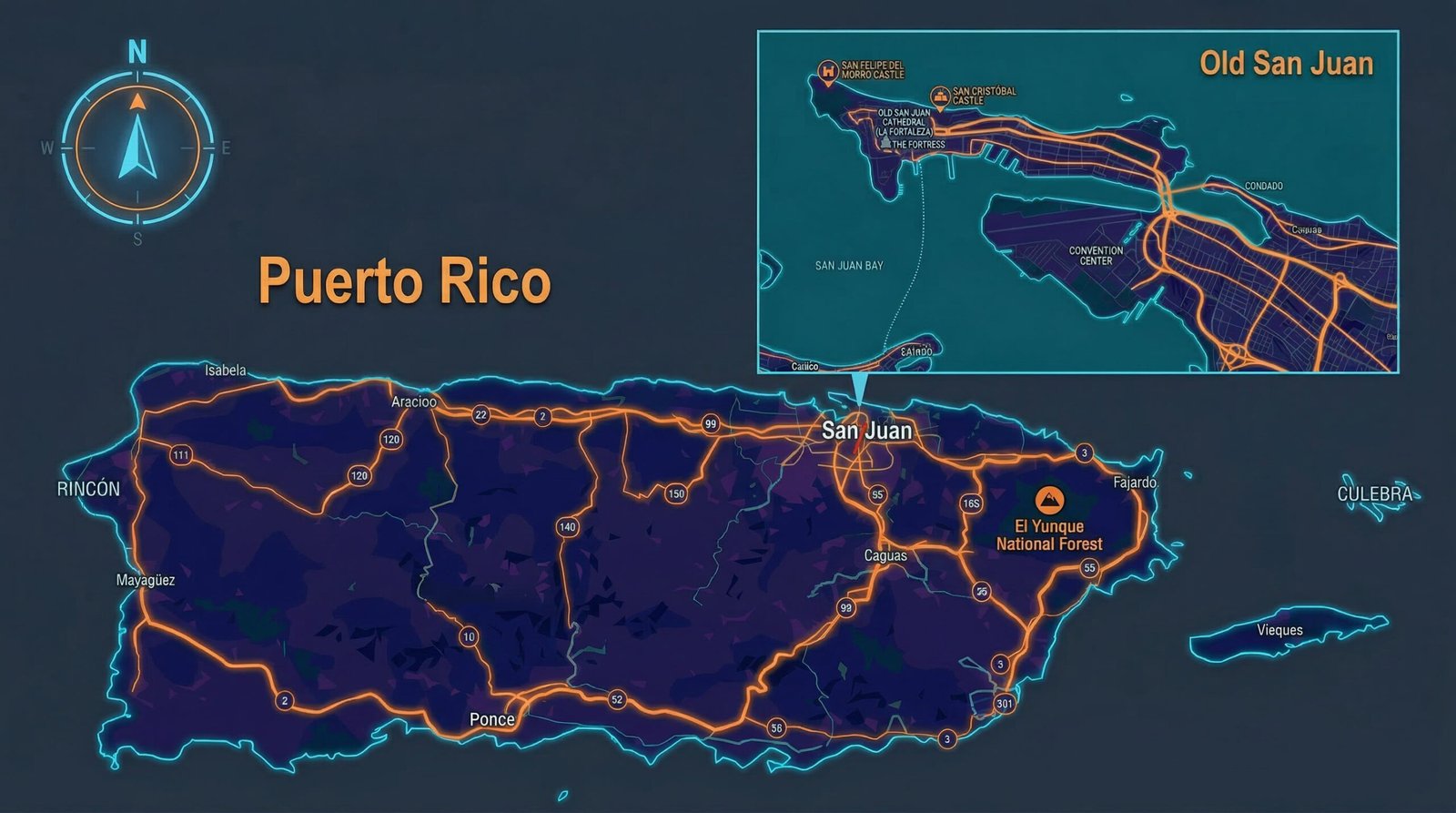
Old San Juan, a distinct district of the larger city of San Juan, Puerto Rico, sits on a small island connected to the main island of Puerto Rico by bridges. To the north lies the open Atlantic Ocean, while to the south, the protected waters of San Juan Bay form a natural harbor. This positioning made it one of the most strategically important locations in the Caribbean. Founded by the Spanish in 1521, the city quickly became a critical military and shipping hub for Spain’s growing empire in the Americas. Treasure fleets carrying gold and silver passed through these waters on their return to Europe, and that wealth made San Juan a constant target.
As a result, the city was built not just for beauty, but for defense.
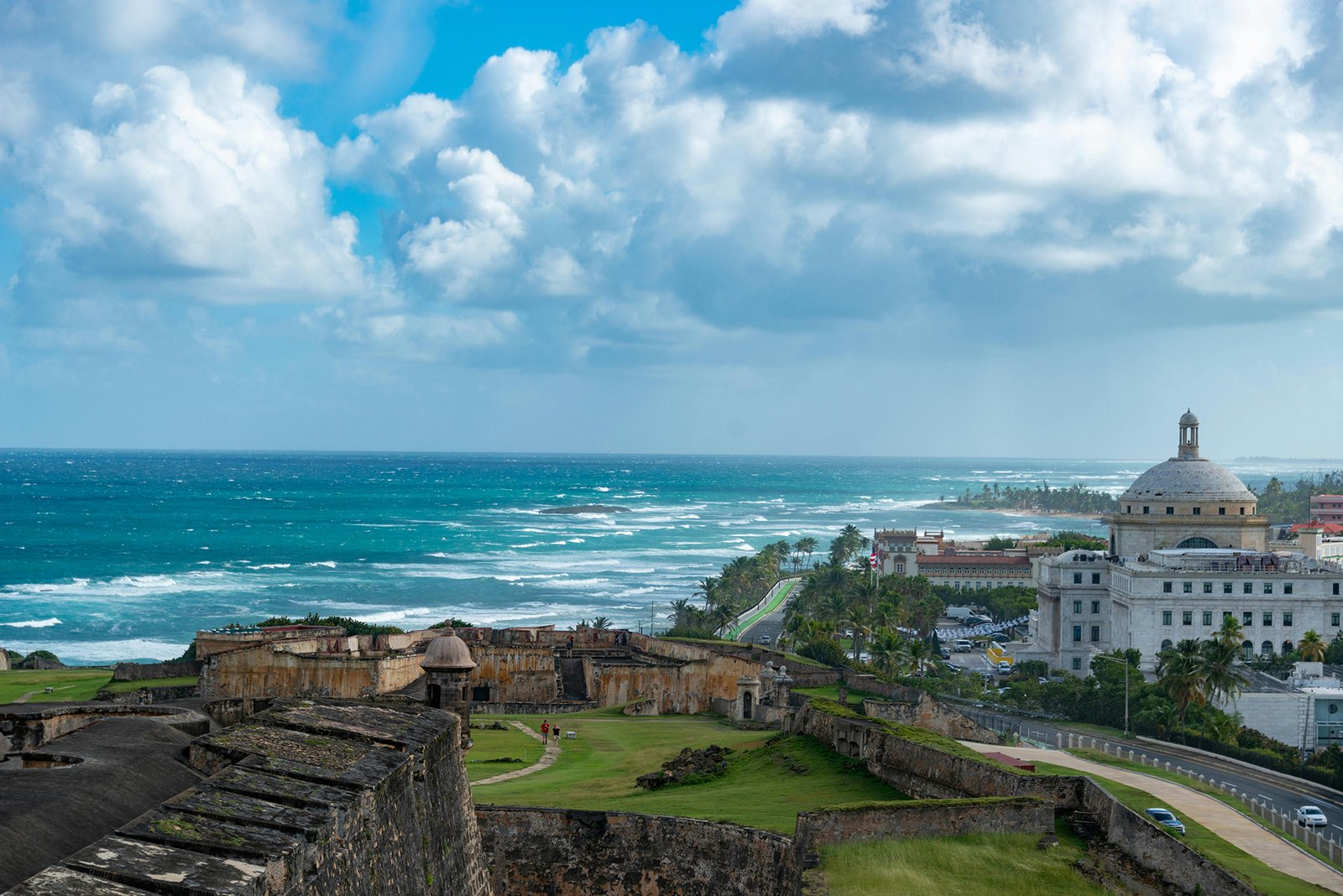
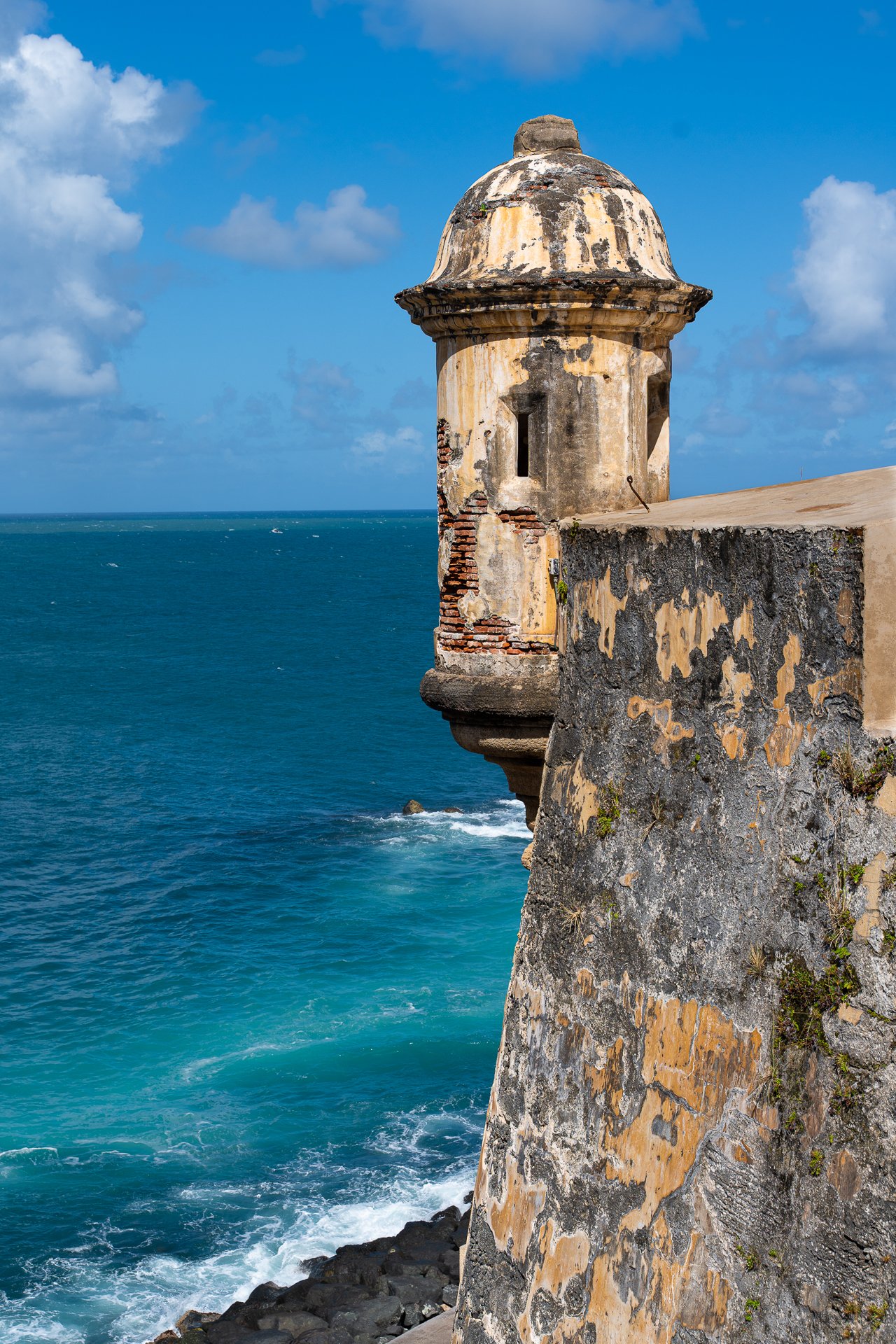
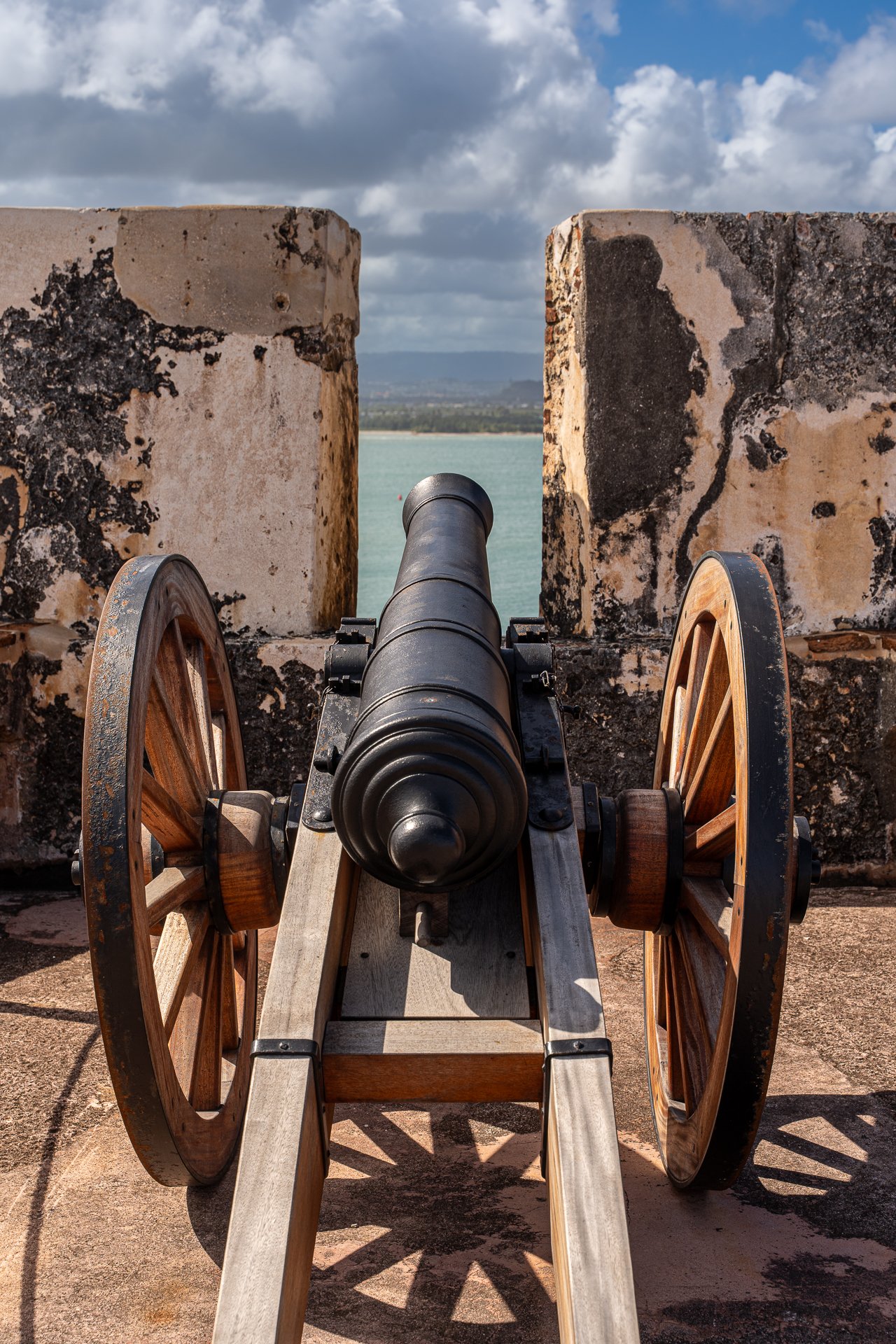
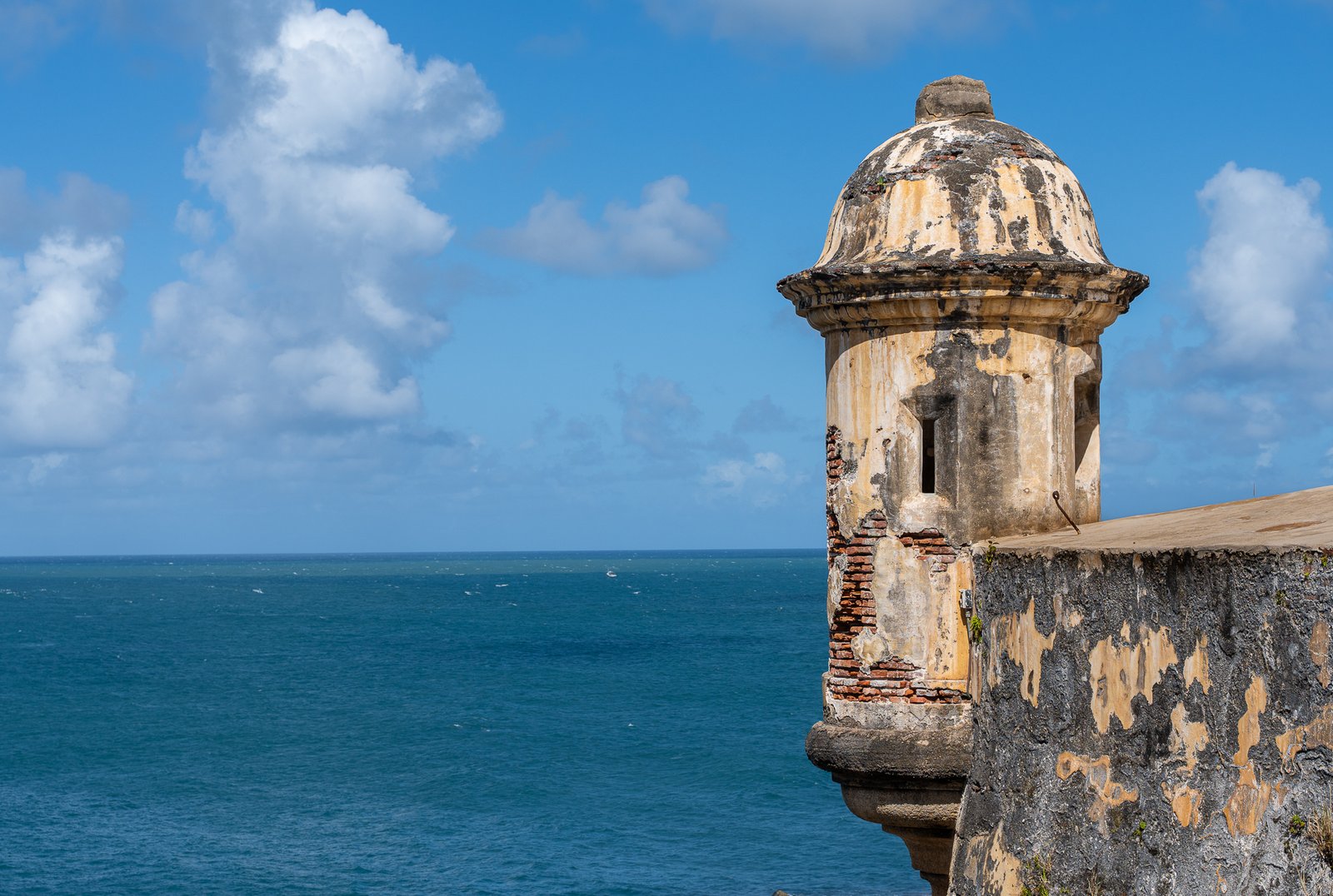
Massive stone walls were constructed to encircle Old San Juan, some rising up to 40 feet high, with fortifications placed at key points to guard both the harbor and the open ocean. More than 500 years later, those same defenses still define the city. Castillo San Felipe del Morro—often referred to simply as El Morro San Juan—stands at the northwestern edge of the island, its thick walls rising above the Atlantic on a rugged headland shaped by wind and waves. From there, the view stretches endlessly across the ocean, while below, waves crash against the cliffs with a steady, rhythmic force.
Across the city, Castillo San Cristóbal was built to defend against attacks from land, forming one of the largest Spanish fortifications in the New World. Its network of ramps, tunnels, and lookout points reflects the seriousness of the threat San Juan once faced. Together, these structures reveal the reality of the city’s geography. This was not simply a colonial settlement—it was a defensive stronghold guarding the edge of an empire. Today, these fortifications are recognized as UNESCO World Heritage Sites, preserving their historical and architectural significance.
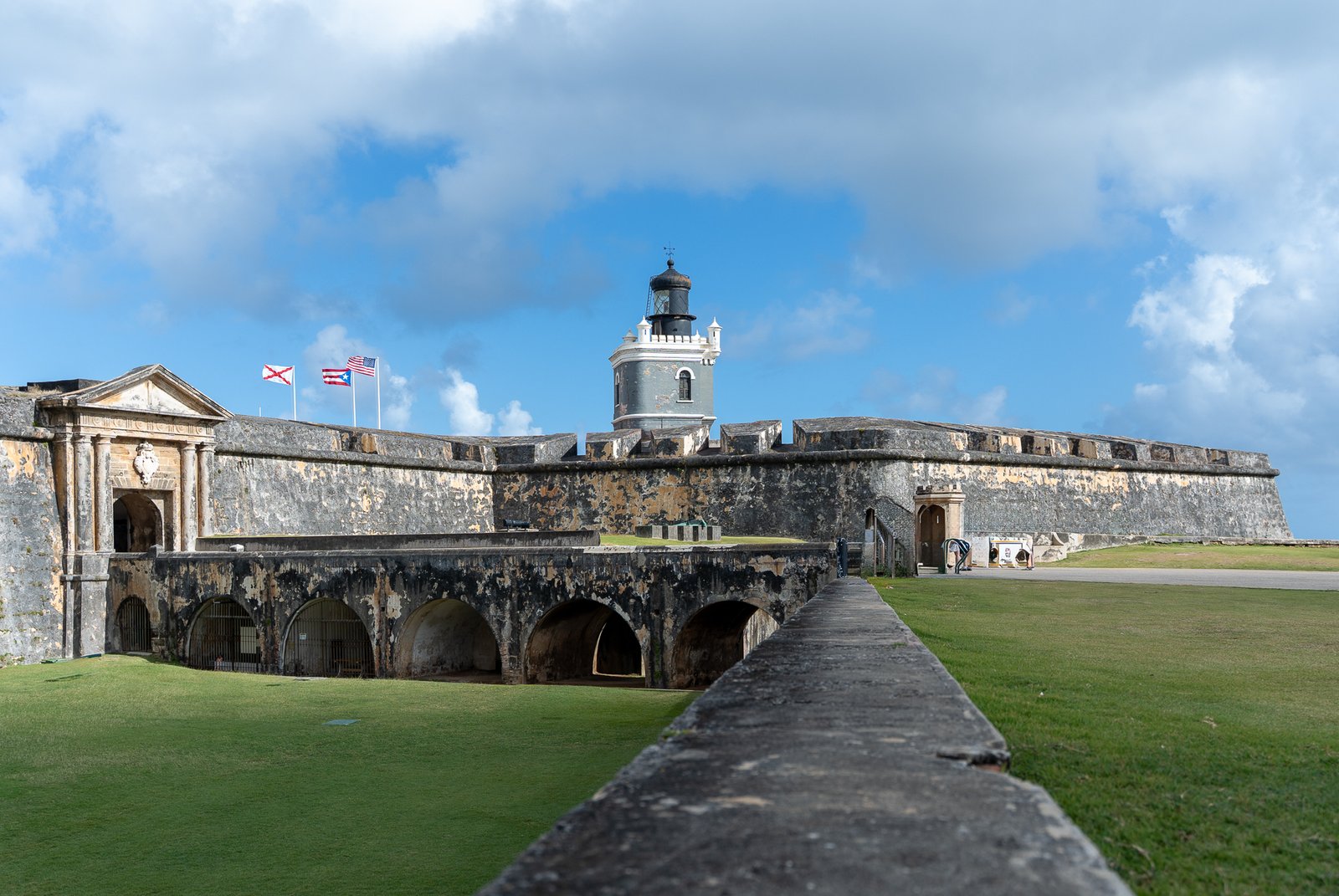
Castillo San Felipe del Morro
City Walls, Coastal Walks, and Cobblestone Streets
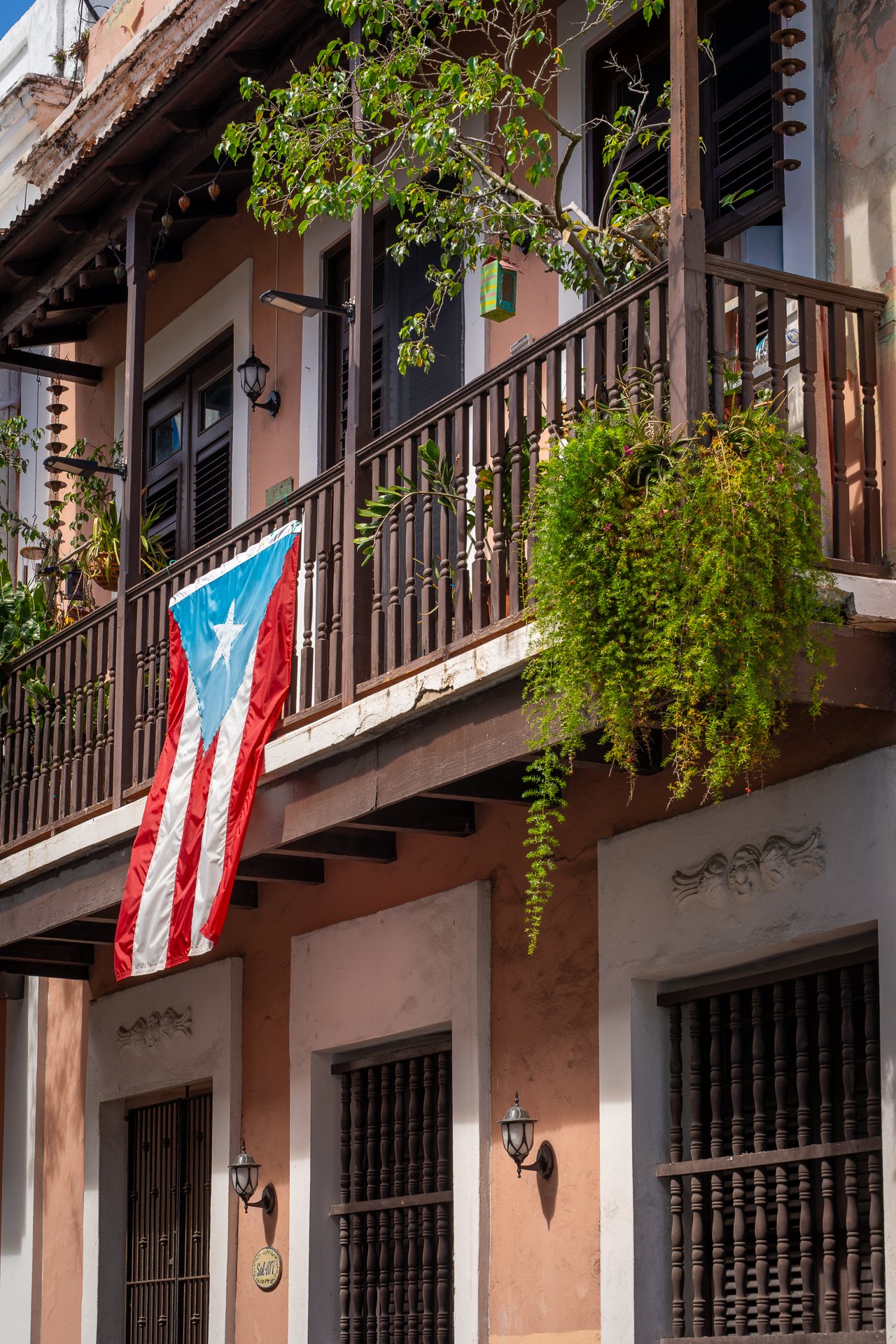
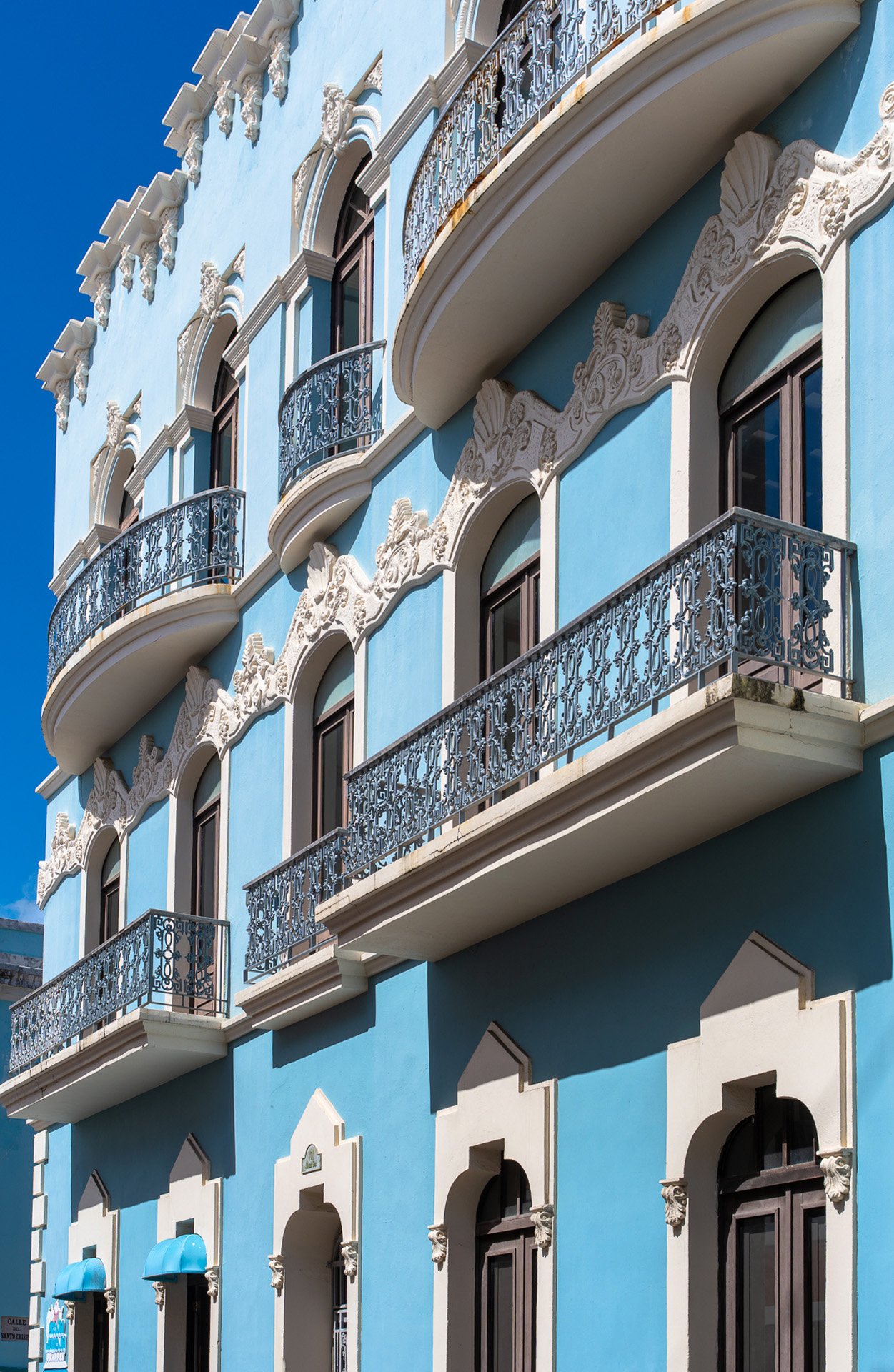
Moving away from the forts and into the city itself, the focus shifts from defense to daily life. Old San Juan functions as a living historic district, where daily life happens within a structure that has remained largely intact for centuries. It unfolds in a dense grid of narrow streets lined with Spanish colonial buildings, their pastel facades softened by time and climate. Wrought iron balconies extend over the streets, wooden doors open directly onto sidewalks, and windows frame glimpses of activity within.
The physical character of Old San Juan is defined as much by its boundaries as by its buildings.
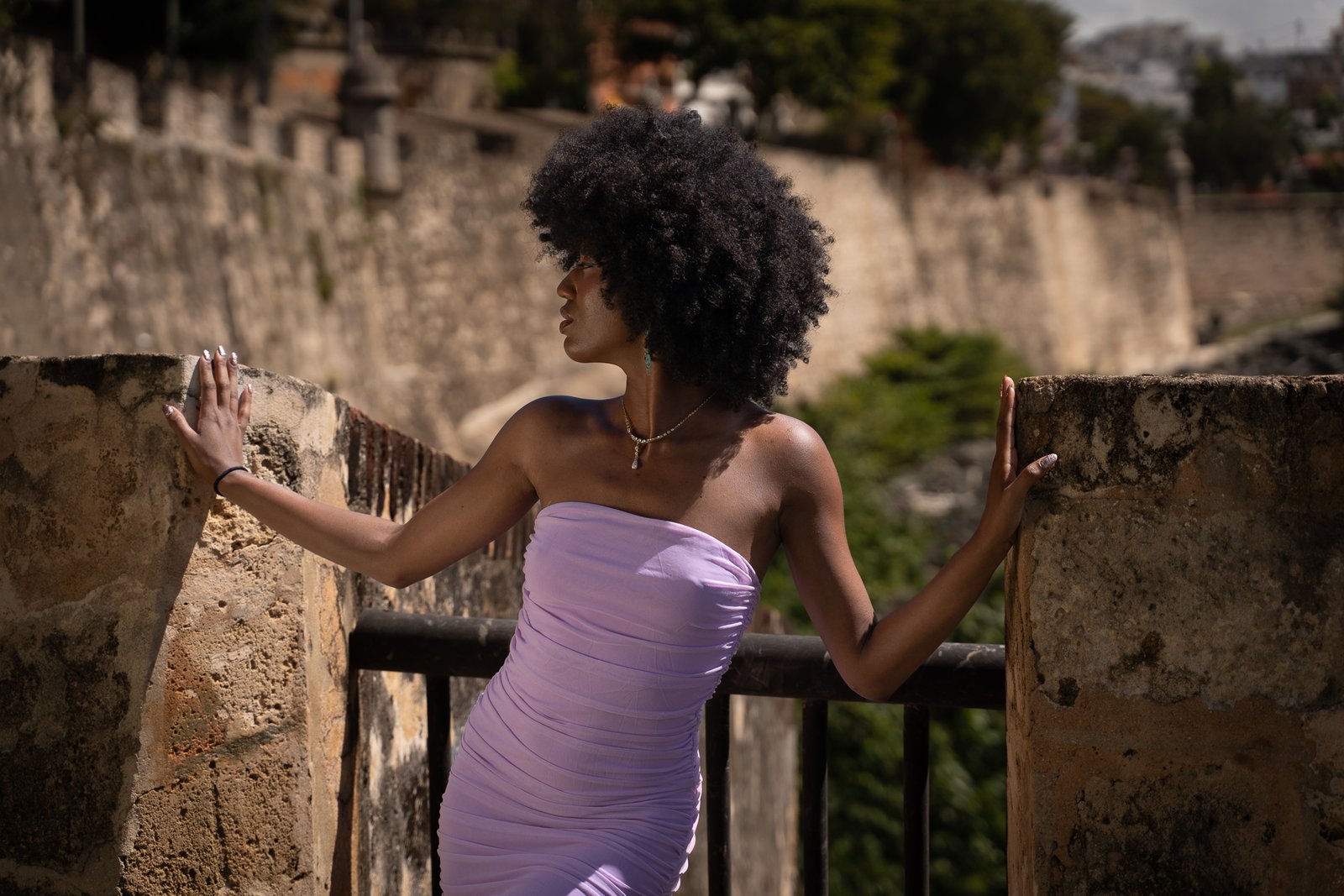
The city walls—La Muralla—were constructed over more than two centuries to protect one of Spain’s most valuable ports in the Americas. Rising in places up to forty feet above the surrounding terrain, they form a continuous edge between the city and the sea. From above, they give Old San Juan the feel of a contained space. From below, especially along the water, they emphasize the height and permanence of the structure.
Walking along the base of those walls, particularly on paths like Paseo del Morro, changes your perspective. The Atlantic is no longer a distant backdrop—it becomes a constant presence. Waves move against the rock, wind pushes steadily inland, and the scale of the fortifications becomes more apparent when viewed from below rather than above.
Inside the walls, the experience shifts again.
The streets are narrow, irregular, and paved with blue-gray cobblestones known as adoquines. These stones were originally brought over as ballast in Spanish ships and later repurposed into the city’s infrastructure. Over time, they’ve taken on their distinctive color and a smooth, worn surface that reflects light in subtle ways, especially after rain.
Together, these elements—walls, water, and streets—create a layered environment. You’re constantly moving between exposure and enclosure, between open ocean views and tight urban corridors. That variety exists within a few blocks, making Old San Juan less about distance and more about transitions. These details are not incidental. They are the result of adaptation, the evolution of a city over hundreds of years.
The tight street layout provides shade from the Caribbean sun, while the materials reflect heat and endure the island’s humid conditions. Light moves quickly through the city, spilling into intersections before fading into shadow, creating contrast and depth that shifts constantly throughout the day. After rain, the cobblestones take on a reflective sheen, amplifying color and texture and turning even ordinary streets into compelling compositions.
To the south, the atmosphere changes again as the city opens toward San Juan Bay. Here, the water is calmer, the light softer, and the perspective wider. From the waterfront, the city appears layered—colorful buildings rising behind ancient stone walls, all shaped by their relationship to the sea. Cruise ships now occupy the harbor where Spanish fleets once gathered, but the connection between the city and the water remains unchanged. Everything here exists because of that relationship.
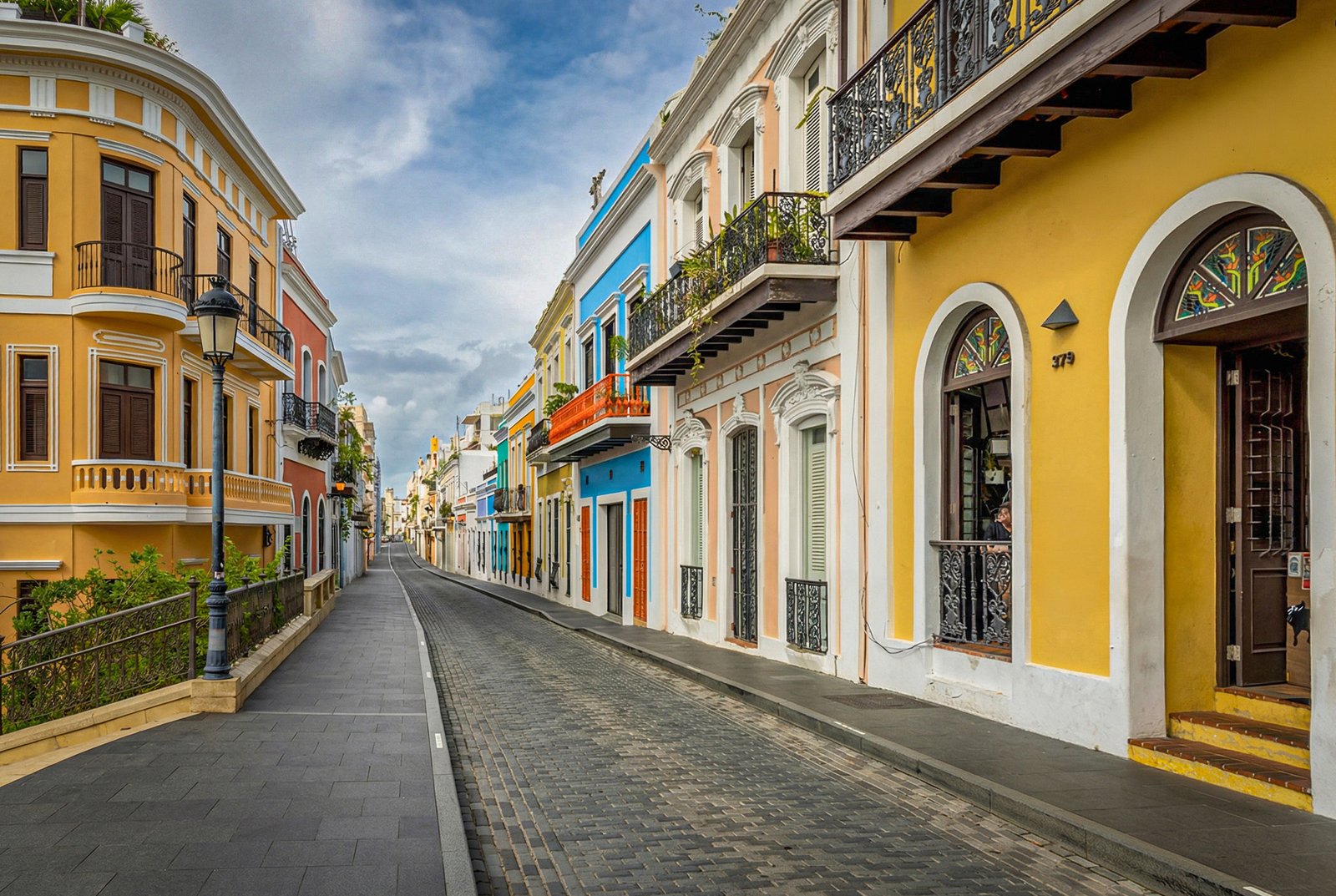
Colorful buildings and cobblestone streets called “adoquines” are trademarks of Old San Juan.
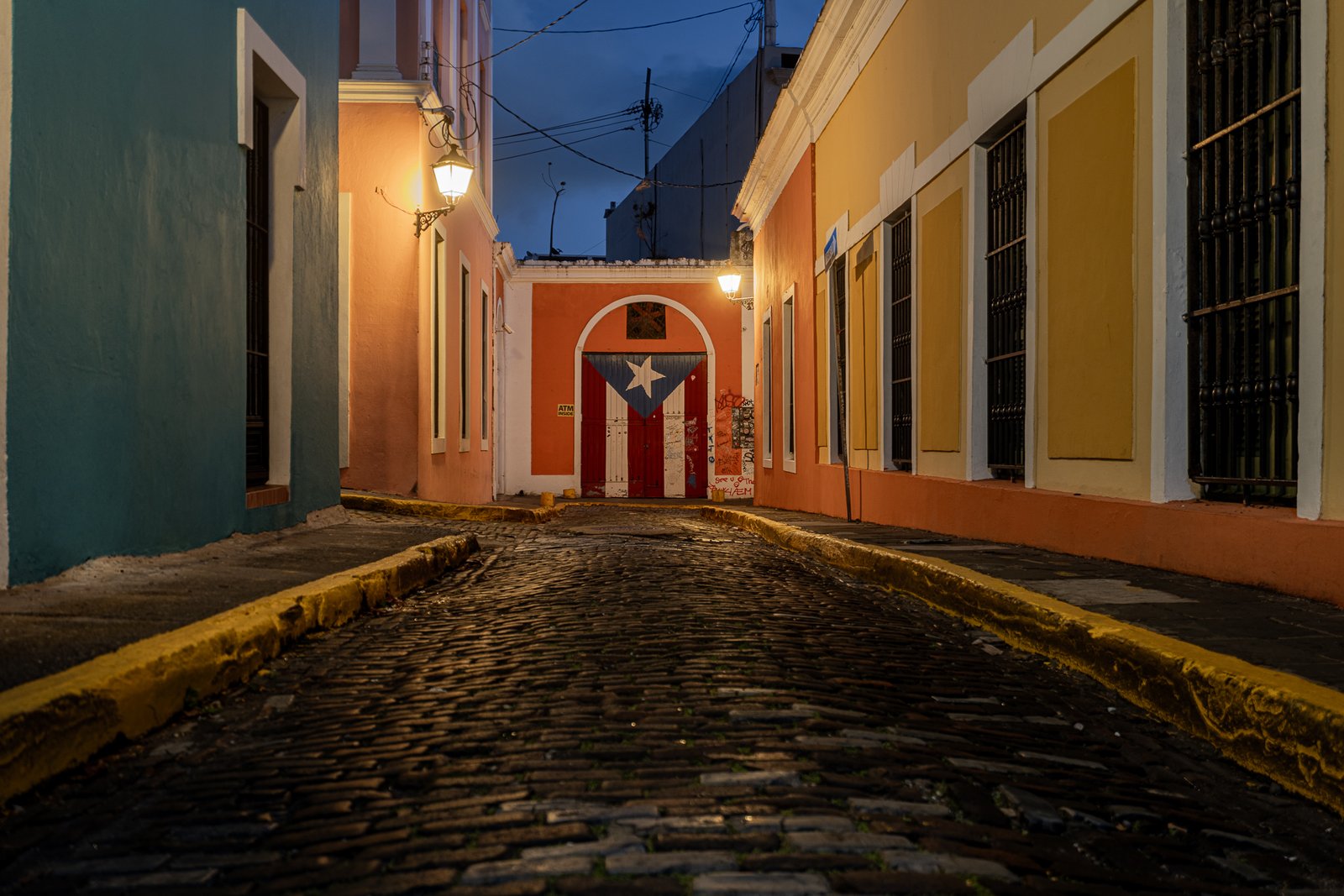
La Puerta de la Bandera (The Flag Door)
What makes Old San Juan especially compelling is how intact it remains despite its age. This is not a reconstructed historic district or a preserved façade built for tourism. It is a functioning city where history continues to coexist with modern life. Government buildings, residences, restaurants, and public spaces all operate within the same structure that has existed for centuries.
La Fortaleza, the official residence of the Governor of Puerto Rico, stands as one of the oldest continuously used executive mansions in the Western Hemisphere. Originally constructed in the 1500s as part of the city’s defensive network, it now serves as the seat of the island’s executive branch. Nearby, the Puerto Rico Capitol reinforces San Juan’s role as the political center of the island. The presence of government institutions adds a layer of immediacy to the city—this is not simply a place to visit, but a place where decisions are made and daily life unfolds.
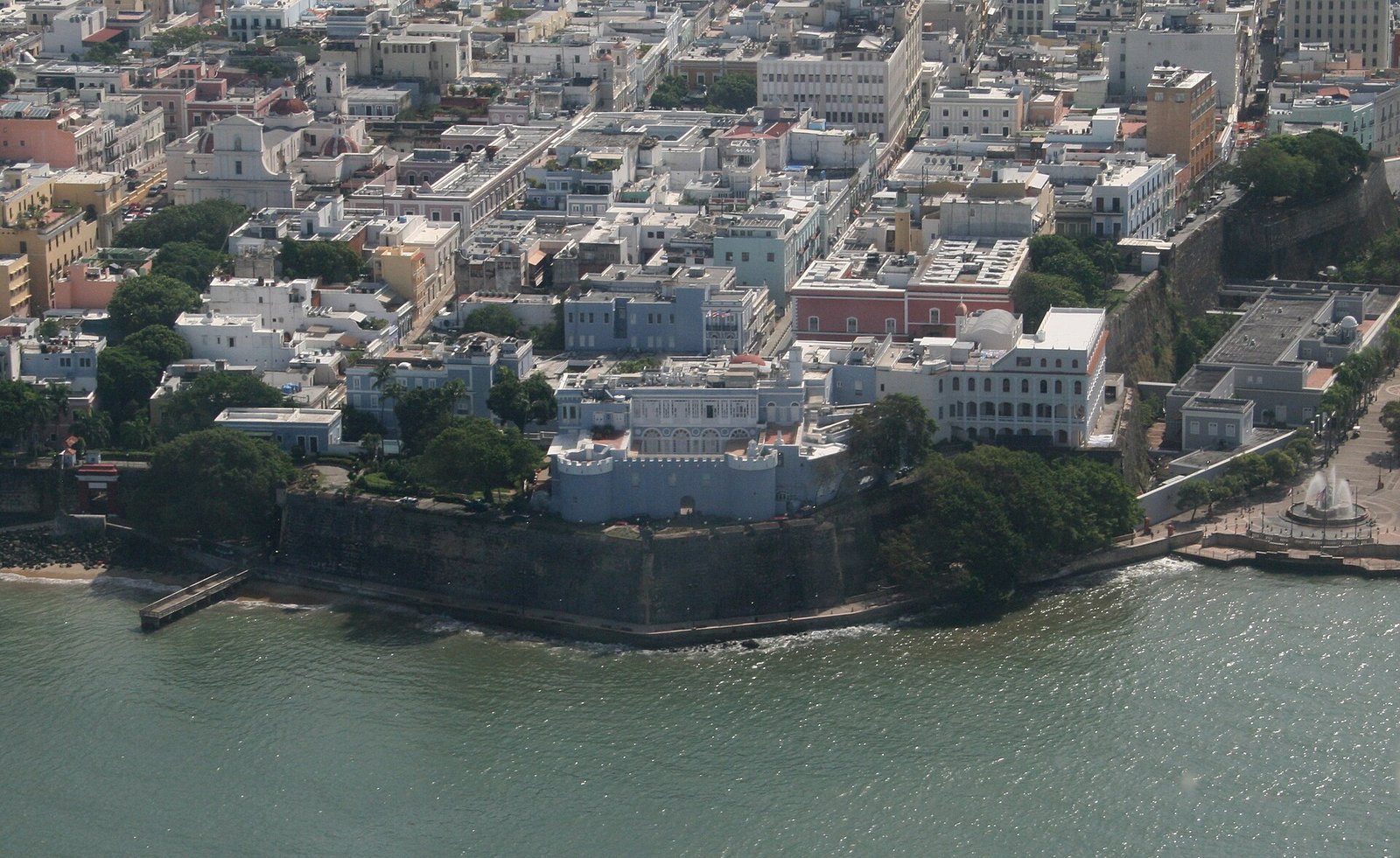
La Fortaleza/Jaro Nemčok
The Capitolio de Puerto Rico
Just beyond the old city walls, the Capitolio de Puerto Rico marks a transition from colonial San Juan to the modern political life of the island. Completed in 1929, the Capitol building sits outside the historic district but remains closely tied to it—both physically and symbolically. Positioned near the entrance to Old San Juan, it reflects a different era of governance, one shaped not by Spanish military strategy but by Puerto Rico’s evolving relationship with the United States in the 20th century.
Architecturally, the Capitol contrasts sharply with the dense, colorful fabric of the old city. Its white marble façade, broad steps, and classical dome draw from neoclassical design traditions more commonly associated with Washington, D.C. The structure feels open and formal, defined by symmetry and scale rather than the tight, adaptive construction found inside the city walls. That contrast reflects a shift in how the island is governed and understood.
Within a short distance, you move from a fortified colonial grid built to defend against naval attack to a modern legislative building designed for governance and public visibility. The shift reflects the broader historical arc of Puerto Rico itself—from Spanish colony to U.S. territory, with each phase leaving a visible mark on the landscape.
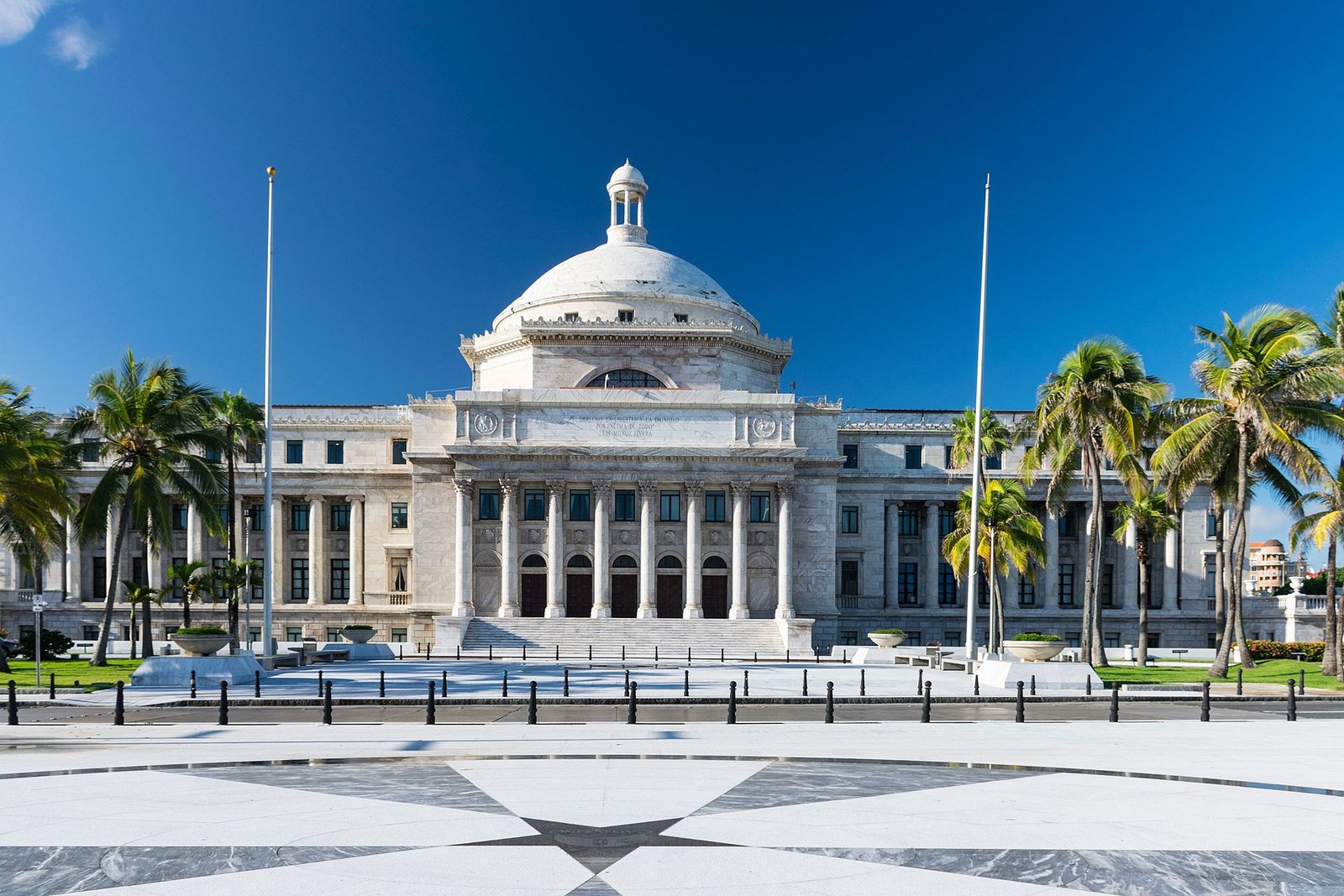
Capitolio de Puerto Rico/Brad Clinesmith
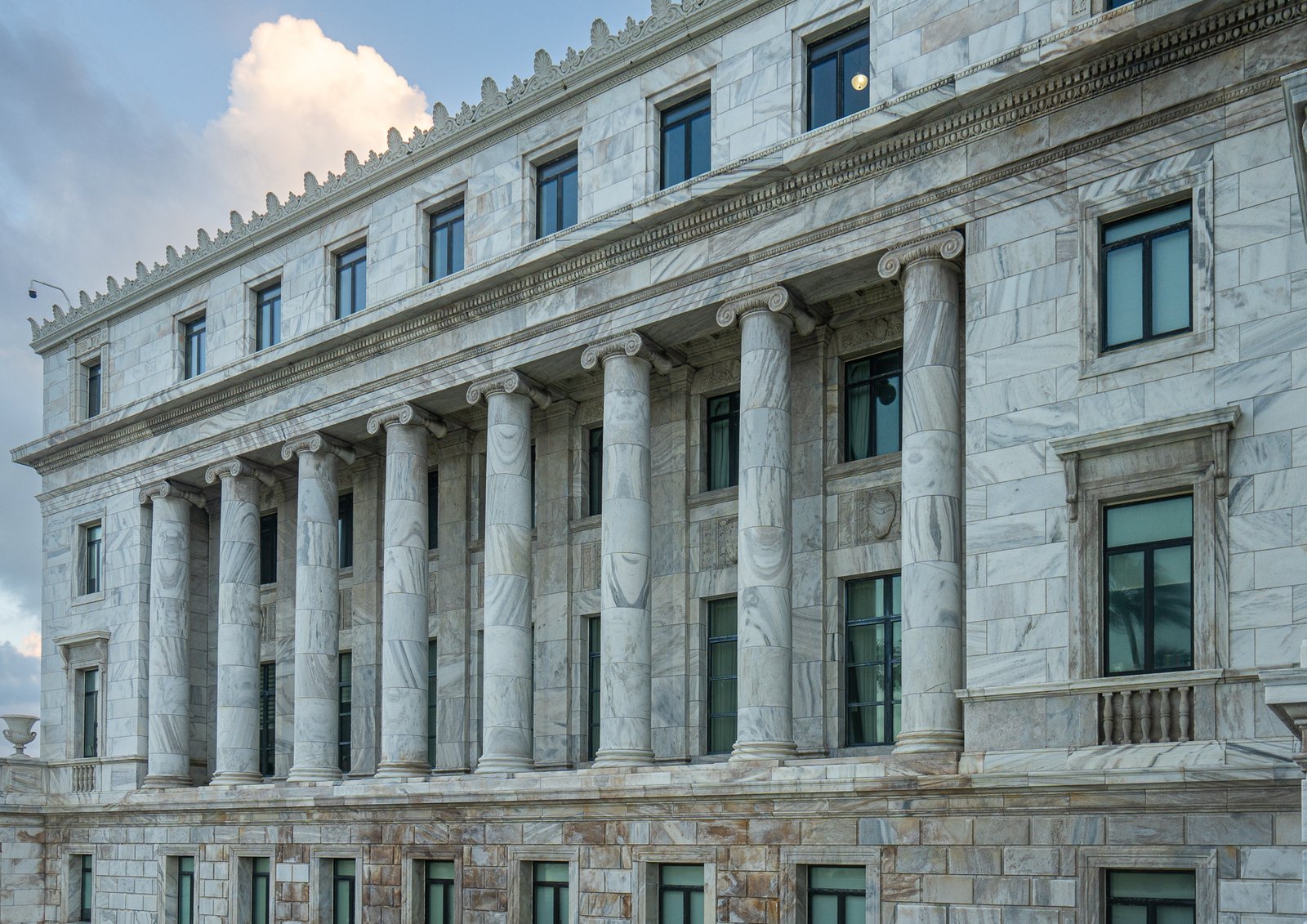
Capitolio de Puerto Rico
Puerto Rico, Tourism, and the Question of Territory
Old San Juan cannot be fully understood without stepping back to look at Puerto Rico as a whole. The island has been shaped by multiple layers of control and identity. Originally inhabited by the Taíno people, it became a Spanish colony in the early 1500s and remained under Spanish rule for more than four centuries. In 1898, following the Spanish-American War, Puerto Rico was ceded to the United States.
Today, Puerto Rico is a U.S. territory. That status creates a unique political and cultural position. Residents are U.S. citizens, use U.S. currency, and are subject to federal law, but the island is not a state. Puerto Ricans cannot vote in presidential elections and have limited representation in Congress. The result is a place that is closely tied to the United States politically and economically, while maintaining a distinct cultural identity rooted in its Spanish and Caribbean history.
That duality is visible in Old San Juan. American influence exists in infrastructure, governance, and modern development, but the physical and cultural character of the city remains overwhelmingly shaped by its earlier history. Architecture reflects colonial design adapted to a tropical environment. Traditions, food, and daily life carry influences that extend far beyond the mainland United States.
Tourism adds another layer. Old San Juan is one of the most visited destinations in the Caribbean, in part because it is easily accessible to U.S. travelers who do not need a passport. Cruise ships arrive regularly, and the streets can become crowded, particularly near the forts and central plazas. And yet, the city retains a sense of authenticity.
It has not been rebuilt to resemble its past—it has simply continued through it. Residents still live and work within the historic district. Government functions operate alongside tourism. The infrastructure, while maintained, has not been fundamentally altered to accommodate large-scale development. For visitors, that creates a balance.
Old San Juan reflects a blend of Spanish heritage, Caribbean geography, and modern Puerto Rican identity. Spanish remains the primary language, shaping daily interaction, signage, and the pace of conversation throughout the city. The architecture reflects European influence adapted to a tropical environment. And the food brings those elements together in a way that is both simple and deeply rooted in place.
Puerto Rican cuisine draws from Spanish, African, and Caribbean traditions, shaped by what the island provides. Dishes like mofongo, made from mashed plantains with garlic and often filled with meat or seafood, reflect that blend of influences. Roasted pork, rice, beans, and fresh seafood are common, prepared with local herbs and flavors that thrive in the island’s climate. In Old San Juan, these meals are served in everything from small, tucked-away cafés to open-air restaurants overlooking plazas or the water.
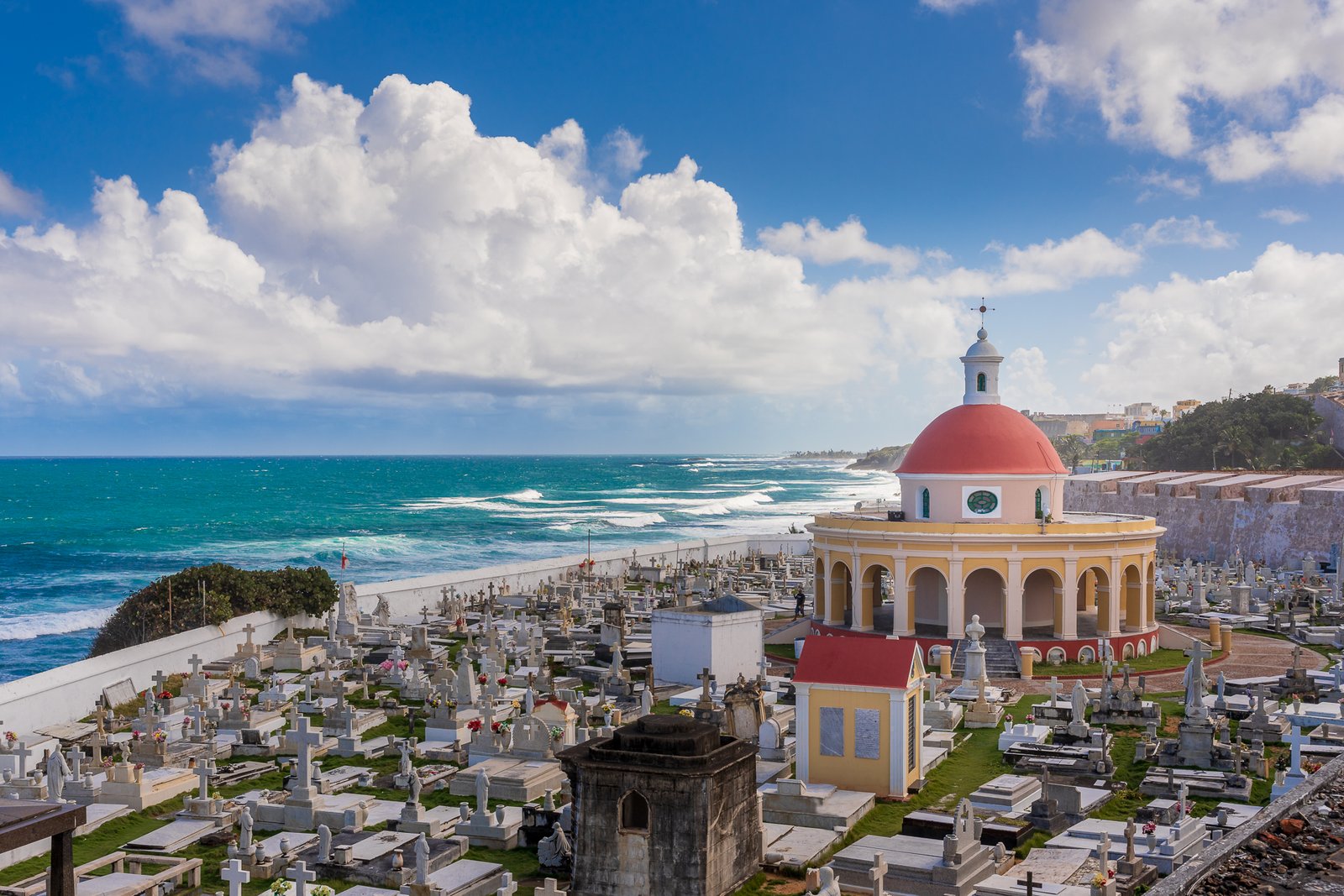
Old San Juan Cemetery
Weather, Light, and the Coastal Climate
Old San Juan’s visual character is heavily influenced by its climate. The city sits in a tropical maritime environment where heat, humidity, and constant exposure to salt air shape both the built environment and the quality of light. Temperatures remain relatively consistent year-round, typically in the 80s during the day with high humidity, and brief rain showers are common.
That consistency creates predictability, but not uniformity. Mornings tend to be clearer, with softer light and less atmospheric haze. By midday, the sun becomes more direct, flattening contrast and washing out color in open spaces. In the late afternoon, the light shifts again, often filtered slightly by moisture in the air, which softens shadows and brings out the pastel tones of the buildings.
Rain plays a role as well. Short, passing showers can change the look of the city almost immediately. The cobblestones darken and become reflective, colors deepen, and the streets take on a different texture. Within minutes, the rain can pass, leaving behind a surface that holds light in a way that dry conditions do not.
After walking the streets, climbing the fortifications, and navigating the shifting light of the city, sitting down to a meal becomes part of the same narrative—another way of understanding how geography shapes daily life.
In the end, Old San Juan is a clear example of how geography shapes experience. Its position on a narrow island dictated its defenses. Its climate shaped its architecture and color. Its harbor defined its role in global trade. Every element of the city exists because of where it is. And that is what makes it compelling.
Old San Juan isn’t about scale. It’s about proximity. Everything is close, layered, and constantly shifting as the light changes. The interest isn’t just in the landmarks, but in the streets, textures, and small details that reveal themselves if you slow down and pay attention. And like many of the most memorable destinations, it leaves you with the sense that you’ve only begun to see it—because in a place like this, every street holds another detail waiting to be noticed.