
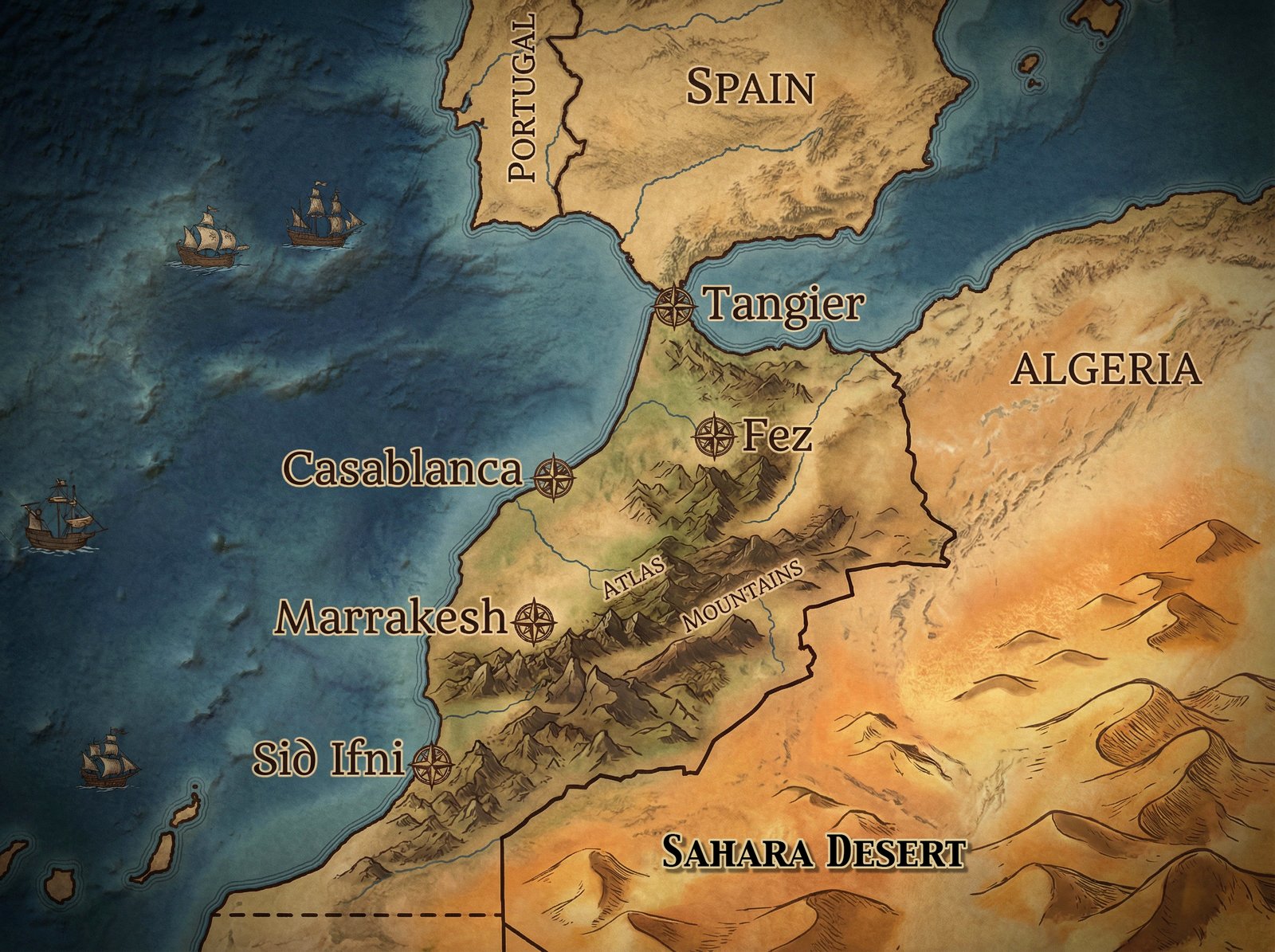
Unexpected Morocco:
Marrakesh and the Edge of the Sahara
A photographer’s journey through Marrakesh, the Atlas Mountains, and the Sahara Desert—exploring Morocco’s markets, landscapes, and unforgettable light.
Some destinations are carefully planned for years. Others arrive unexpectedly and leave a deeper impression than anything you could have anticipated.
Morocco was never high on my list of places to visit. I didn’t have any negative thoughts about it—I simply didn’t know much about the place. There were other locations around the world I had always imagined exploring first. But sometimes travel has a way of choosing you.
When a friend invited me to join him on a scouting trip for a photography workshop he would be doing there, curiosity quickly replaced hesitation. An unfamiliar destination soon became one of the most visually captivating places I’ve ever experienced. Morocco revealed itself as a landscape shaped by contrast—where ancient cities, towering mountains, the Atlantic Ocean, and the vast Sahara Desert combine to create an environment that feels both timeless and cinematic.
And at the center of it all is Marrakesh, a city that can only be described as sensory overload… but in a different way than you probably expect.
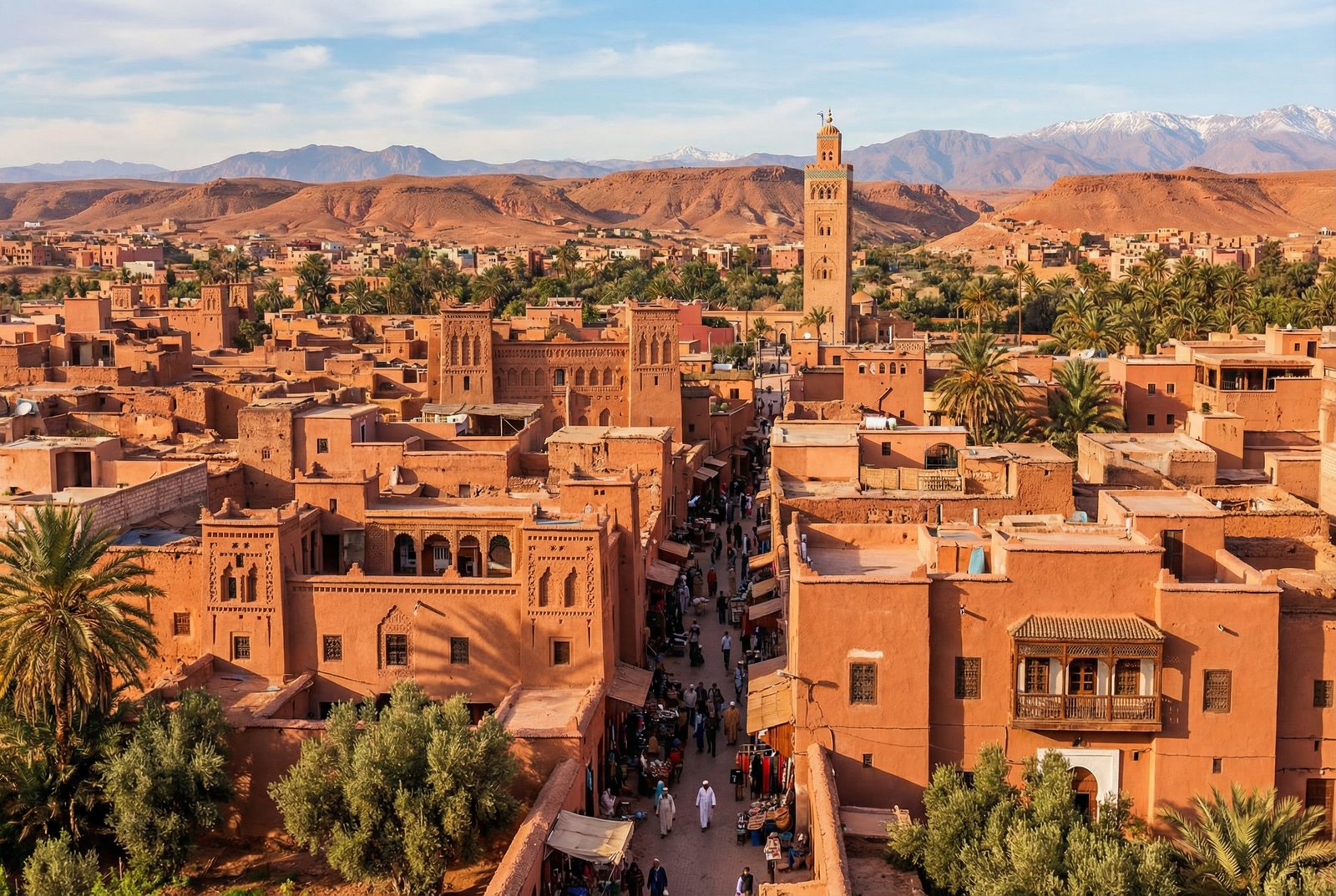
Marrakesh: The Red City
Marrakesh sits at the foot of the Atlas Mountains in central Morocco, positioned between the mountains to the south, the ocean to the west, and the desert habitats that stretch toward the Sahara.
For centuries it has been a crossroads of trade routes linking North Africa, the Middle East, and the Mediterranean world. Long before modern travel existed, caravans crossed the Sahara carrying salt, gold, spices, and textiles to markets in the north. Marrakesh became one of the places where those worlds met. That long history is still visible in the architecture and the rhythm of daily life.
Marrakesh is often called The Red City, a reference to the terracotta-colored walls and buildings that define its skyline. Built from red sandstone and clay, the architecture gives the city a warm glow that seems to intensify in the Moroccan sunlight.
Early in the morning the buildings take on a soft pink hue. By late afternoon the desert light deepens the colors into shades of rust and amber. Long shadows stretch across the narrow streets, revealing every crack, curve, and texture of the centuries-old walls.
That light is one of Marrakesh’s defining features. The desert atmosphere produces a soft golden tone that washes across the city throughout the day, highlighting textures in stone walls, carved wood, and colorful textiles. But the real character of Marrakesh is found inside the medina.
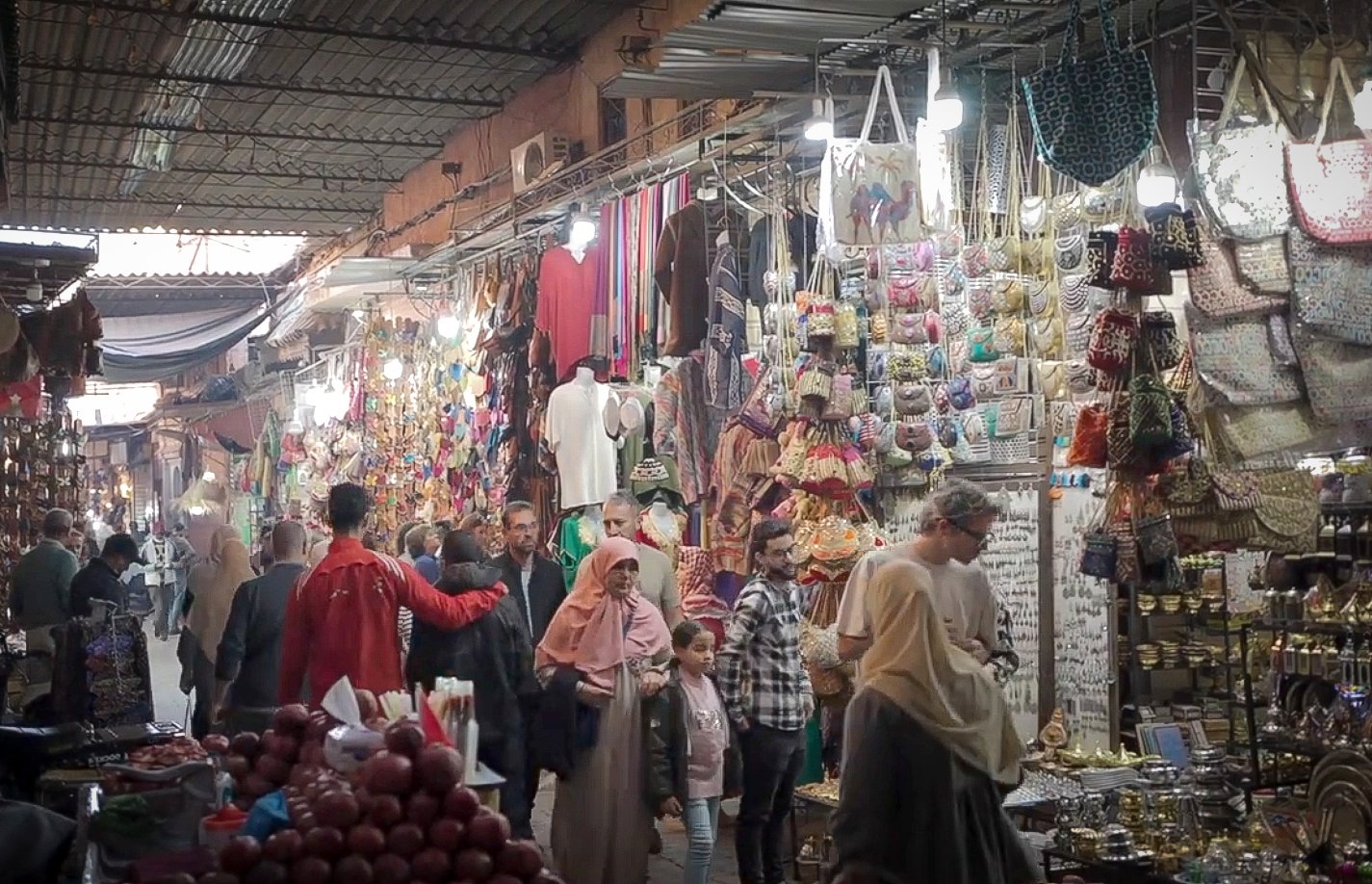
The Marrakesh souk is packed with shoppers and goods of all kinds.
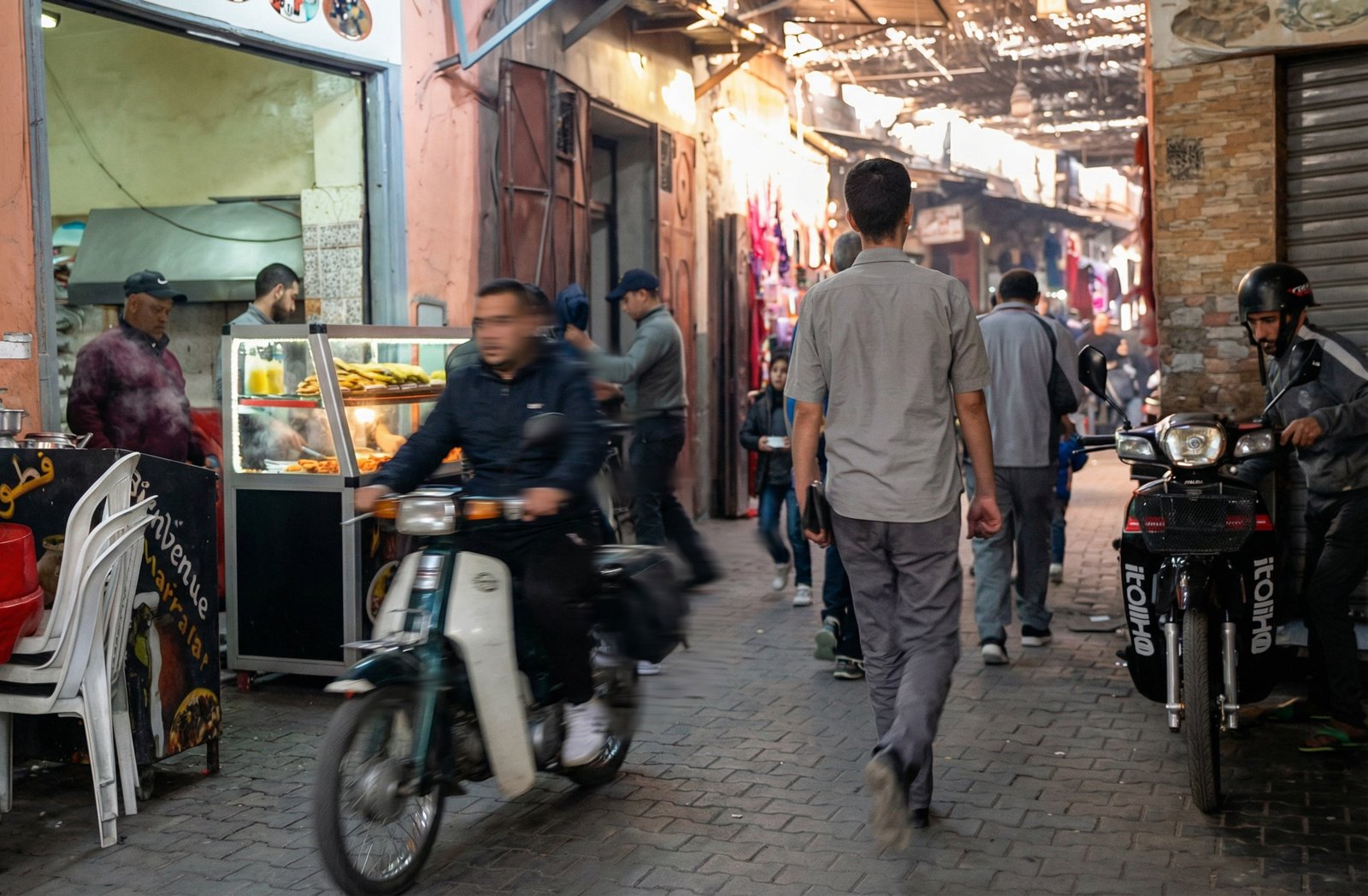
Pedestrians and motorized vehicles share the narrow corridors of the souk.
The Medina and the Souks
The medina of Marrakesh is a labyrinth. Within the ancient walls lies a maze of narrow streets filled with shops, craftsmen, markets, and homes. Many of the streets are barely wide enough for two people to pass comfortably, yet somehow they support a constant flow of pedestrians, bicycles, and the occasional motorcycle weaving through the crowds.
There are no neat city grids here. The streets twist, turn, narrow, and suddenly open again without warning. Maps are almost useless. The only reliable way to explore is simply to wander. This is where the famous souks of Marrakesh are located.
A souk is a traditional market, but describing the Marrakesh souks simply as a market doesn’t quite capture the experience. Walking through them feels more like entering a living museum of craft and commerce that has been operating continuously for hundreds of years. Every turn reveals something different.
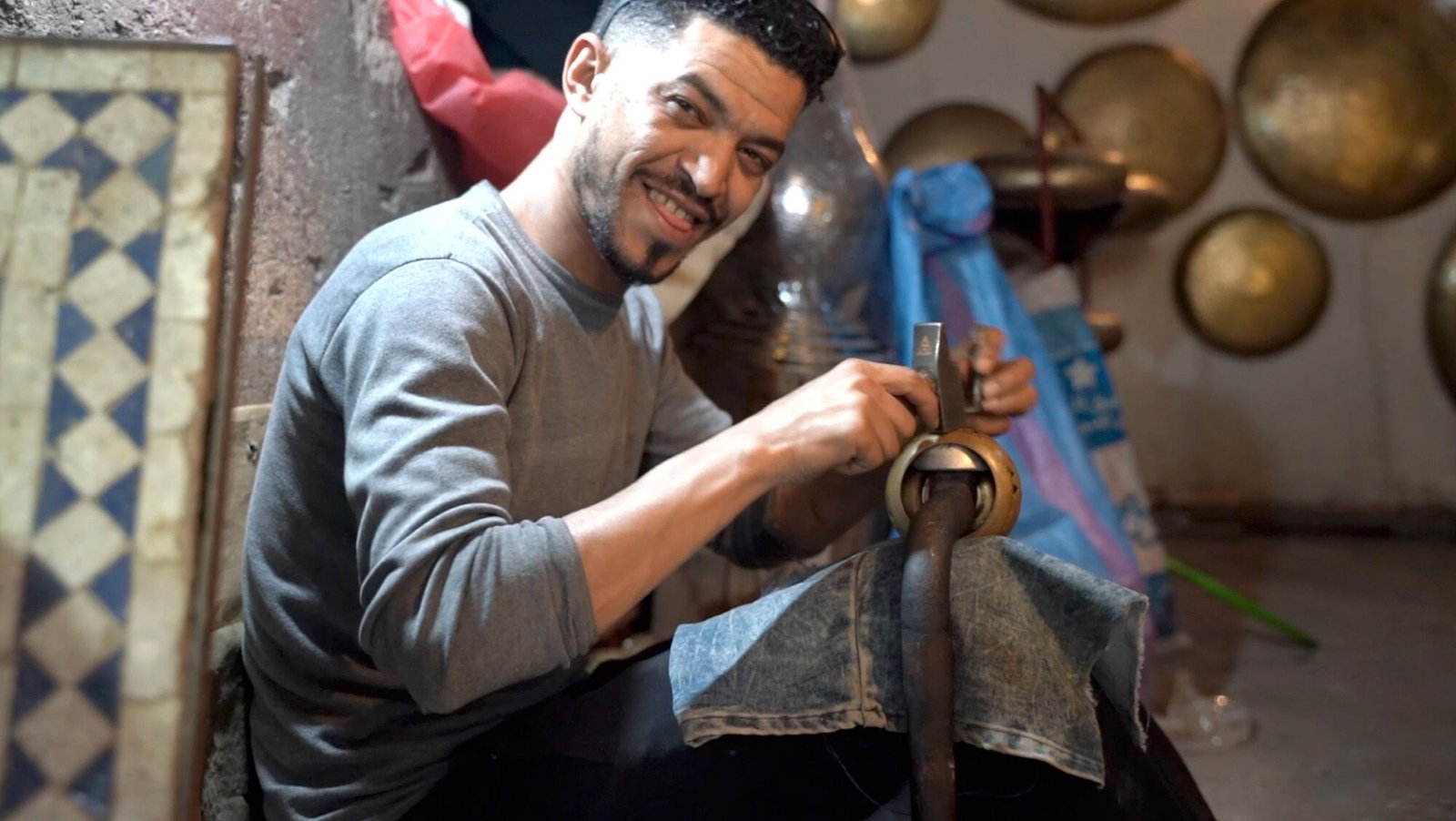
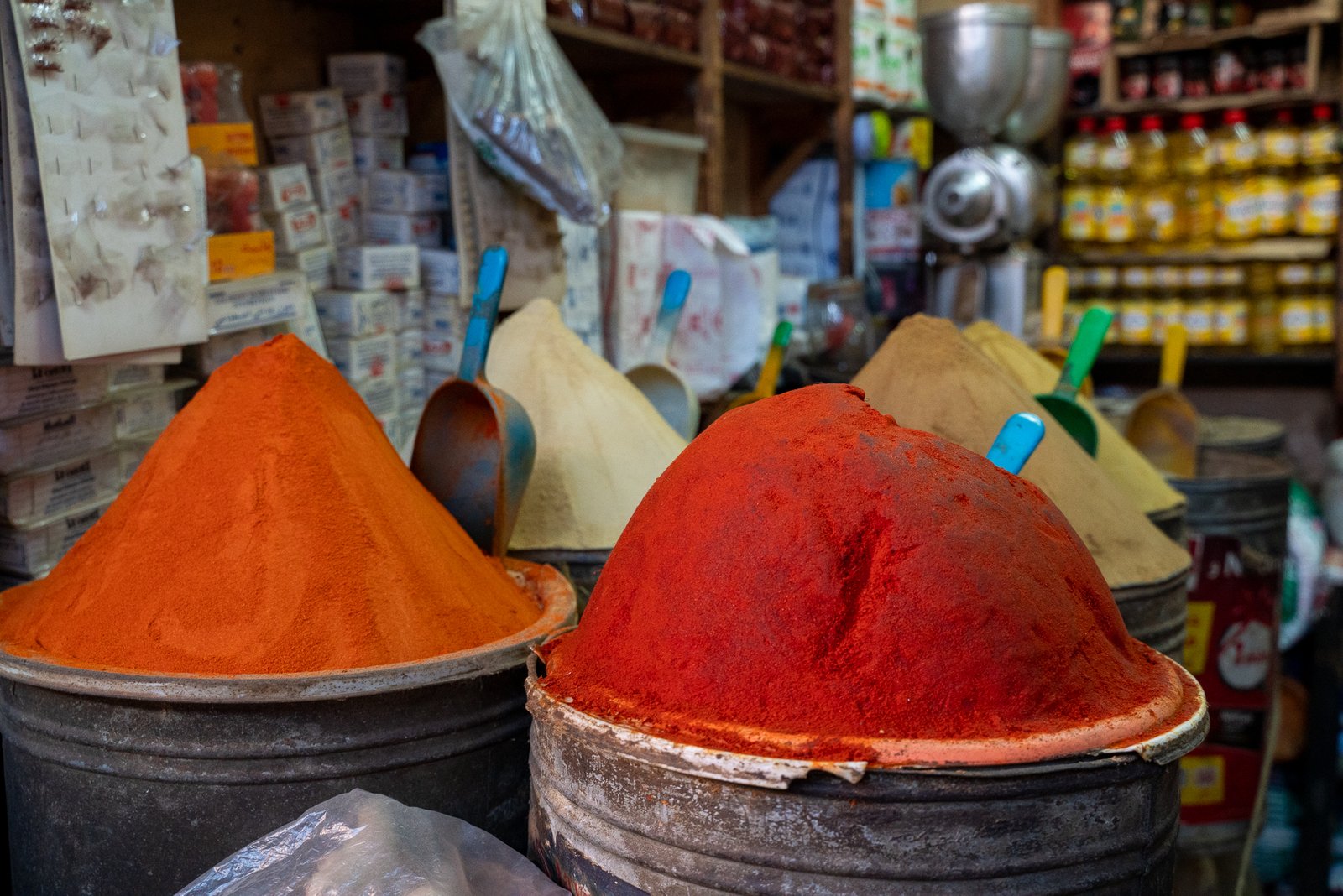
One alley might be lined with leather goods and colorful slippers known as babouches. Another might be filled with stalls selling spices stacked into brilliant pyramids of saffron, turmeric, and paprika. A few steps further and you’ll hear the rhythmic hammering of artisans shaping brass lanterns or bracelets by hand.
The sounds echo through the narrow corridors—metal striking metal, shopkeepers greeting customers, the hum of conversation in Arabic and French, and the occasional burst of laughter from somewhere deeper in the maze. The souks present an almost continuous stream of visual detail.
The narrow streets create dramatic shadows that cut across the warm-toned buildings. Textiles hang overhead in bright colors. Lanterns reflect the light in intricate patterns. And everywhere you look there are faces—shopkeepers, craftsmen, and travelers passing through the maze.
The layout of the medina is not accidental. Like many ancient cities in North Africa, it developed organically around trade routes and defensive walls, growing denser over time as merchants and craftsmen clustered near the center of commerce. The narrow streets serve a practical purpose as well: they provide shade from the intense Moroccan sun, keeping the city cooler while creating the dramatic light and shadow that defines the character of the space.
Unlike some markets around the world where photography is discouraged, most vendors here were surprisingly welcoming. At one stall I spent several minutes filming a craftsman carefully hammering a brass bracelet into shape. His concentration never broke. Each strike of the hammer echoed sharply through the narrow alleyway while sunlight bounced off the polished metal in flashes of gold.
Moments like that appear everywhere in Marrakesh if you slow down long enough to notice them.
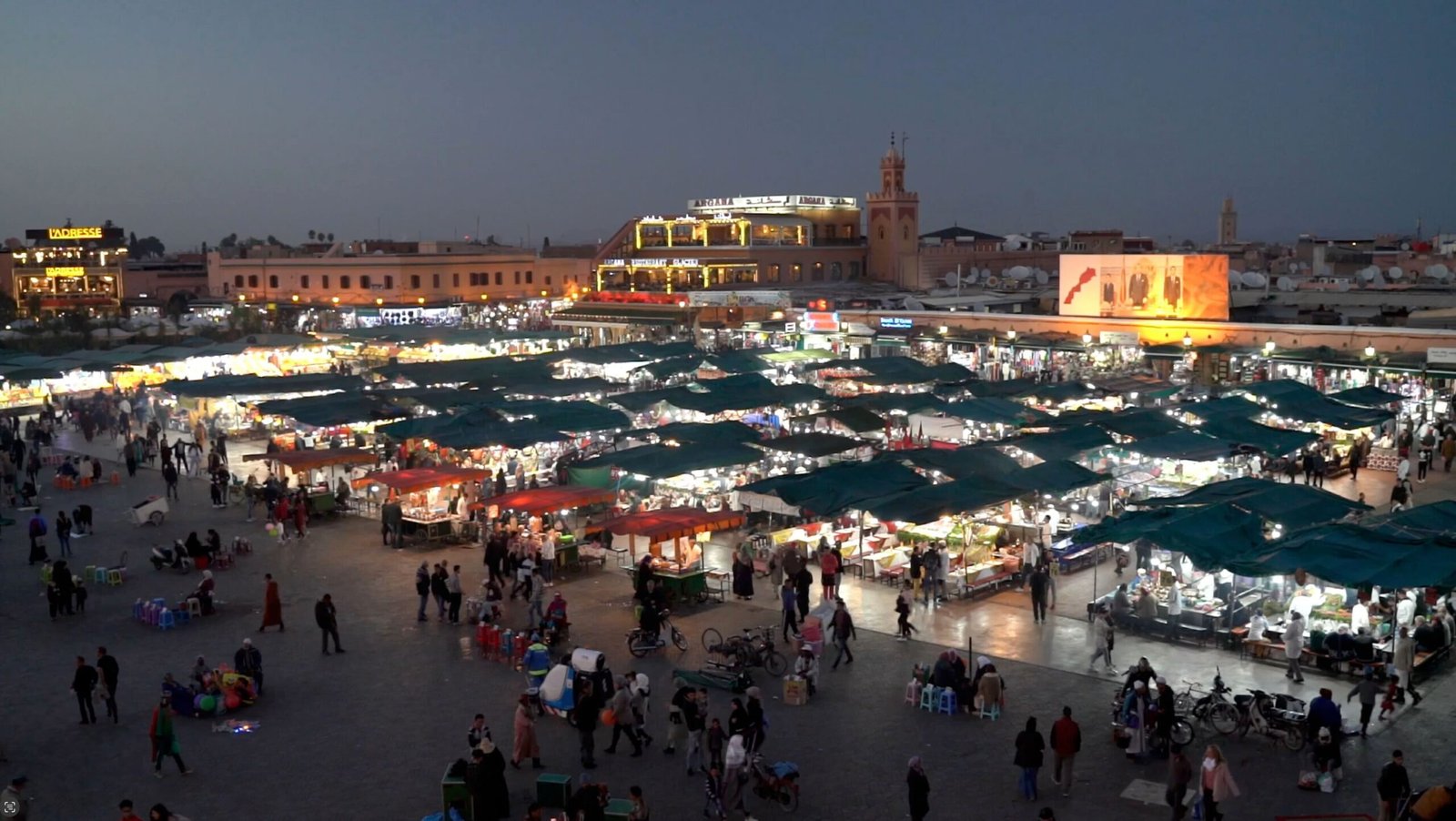
Jemaa el-Fnaa is the heartbeat of Marrakesh, especially at night.
Jemaa el-Fnaa: Marrakesh After Dark
At the center of Marrakesh lies Jemaa el-Fnaa, the city’s main square and one of the most famous public spaces in North Africa. Jemaa el-Fnaa occupies one of the most important geographic positions in Marrakesh. Historically it sat near the point where desert caravans arrived after crossing the Atlas Mountains and the northern edge of the Sahara. Today the square remains a central gathering place where cultures, travelers, merchants, and performers converge—much like they did centuries ago when the city was a hub of trans-Saharan trade.
During the day the square is lively but relatively calm. Juice vendors line up colorful carts filled with fresh oranges, performers entertain small groups of tourists, and merchants set up stalls throughout the plaza. But as the sun begins to set, Jemaa el-Fnaa transforms. Food vendors roll in carts and begin assembling rows of grills that fill the air with smoke and the scent of spices. Musicians gather in circles playing traditional instruments. Storytellers and even dancing monkeys attract crowds with animated performances that continue long into the night.
The square becomes a swirling mix of sound, motion, and energy. Smoke drifts upward into the warm evening air while lights flicker on across the plaza. Voices overlap, drums echo through the crowd, and the scent of grilled meats mixes with the sweet smell of mint tea.
It presents both opportunity and challenge. The low light and constant movement make it difficult to fully take in, but the atmosphere is unlike anything else in the city. Street performers, musicians, and food vendors create a rhythm that feels spontaneous and alive. It’s chaotic, vibrant, and difficult to fully describe.
A short video clip showing the nonstop activity of the souk.
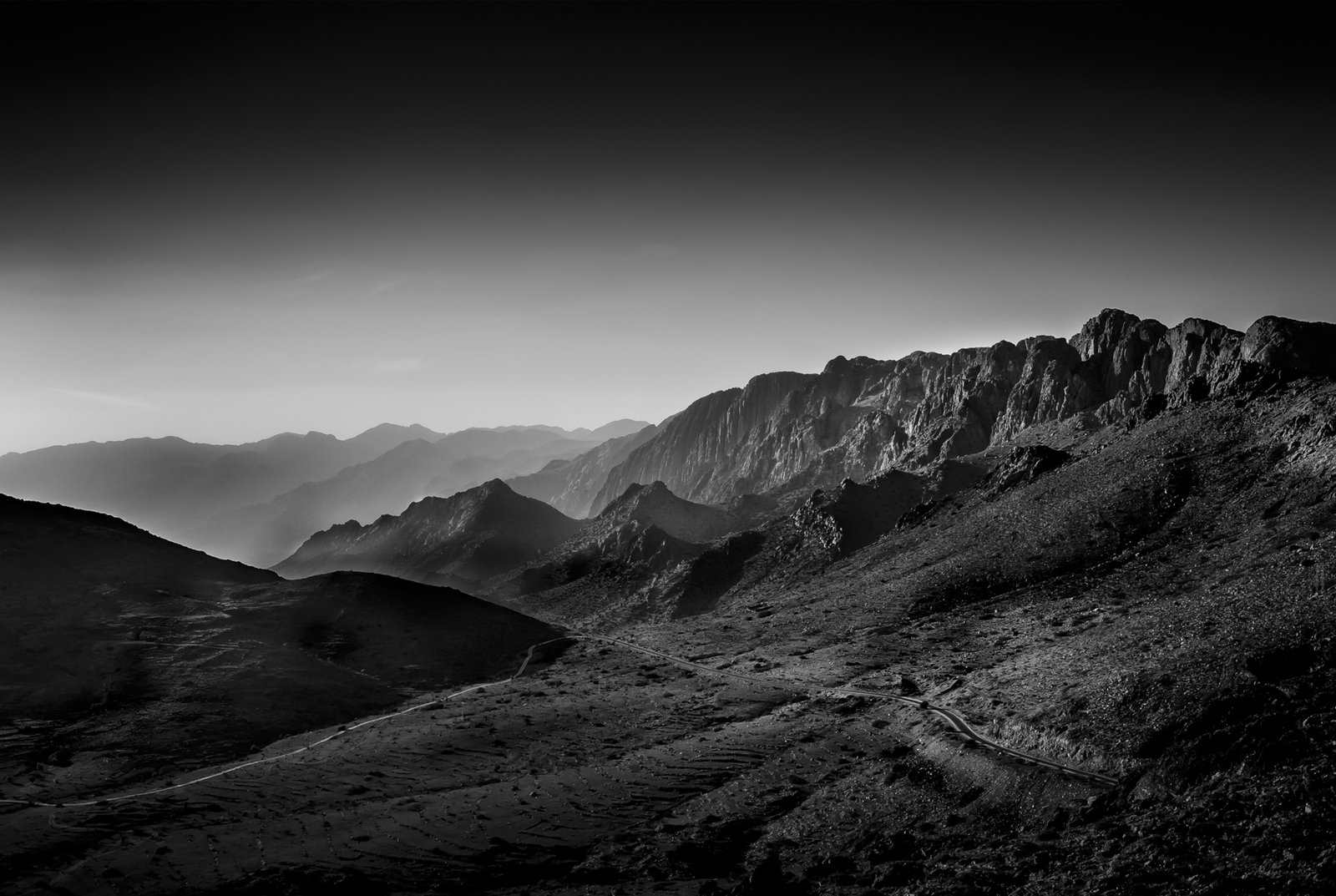
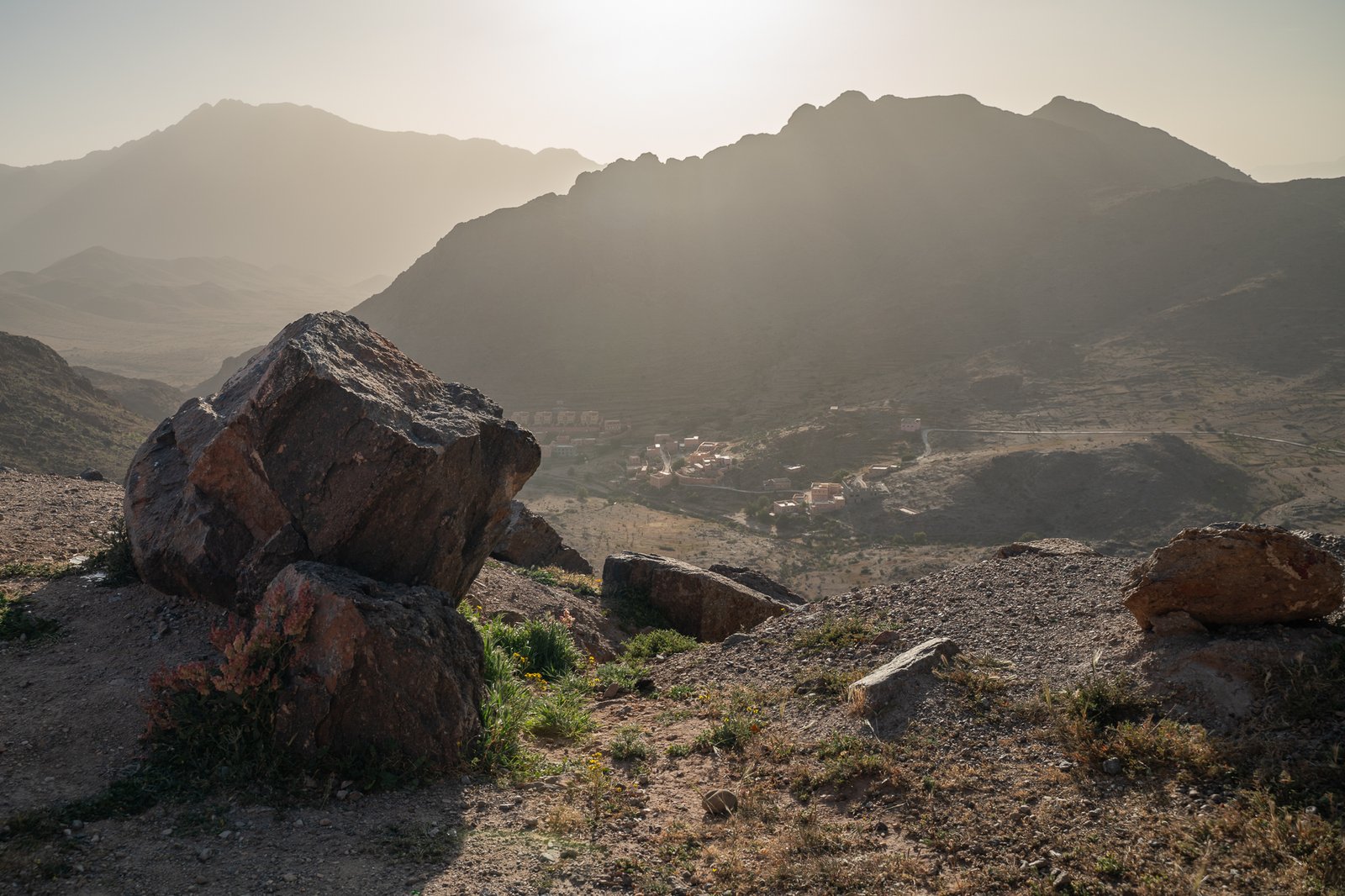
The Atlas Mountain Range of southern Morocco
Beyond the City: Into the Atlas Mountains
While Marrakesh is an extraordinary destination on its own, one of its greatest advantages is its location.
Just beyond the city rise the Atlas Mountains, a rugged mountain range that stretches across much of Morocco. These mountains create a dramatic transition between the fertile regions near the coast and the desert landscapes further south.
Driving out of Marrakesh toward the Atlas Mountains reveals a completely different side of Morocco.
The dense city streets gradually give way to open countryside. Villages cling to the hillsides. Winding roads climb higher into rocky terrain where the air becomes cooler and the views expand across wide valleys.
The mountains offer a completely different visual environment from the city. The warm tones of Marrakesh are replaced by stone villages, green valleys, and rugged peaks that rise above the landscape.
The Atlas Mountains form one of North Africa’s most important geographic features. Stretching more than 1,500 miles across Morocco, Algeria, and Tunisia, they act as a natural barrier between the Mediterranean climate of the north and the arid deserts of the south. These mountains shape everything from weather patterns to settlement locations—and for travelers they provide a dramatic transition between Morocco’s lush valleys and the vast Sahara beyond.
But the mountains are only the beginning.
The Atlantic Coast: Morocco’s Western Horizon
One of the most unexpected parts of the journey came when the road turned west.
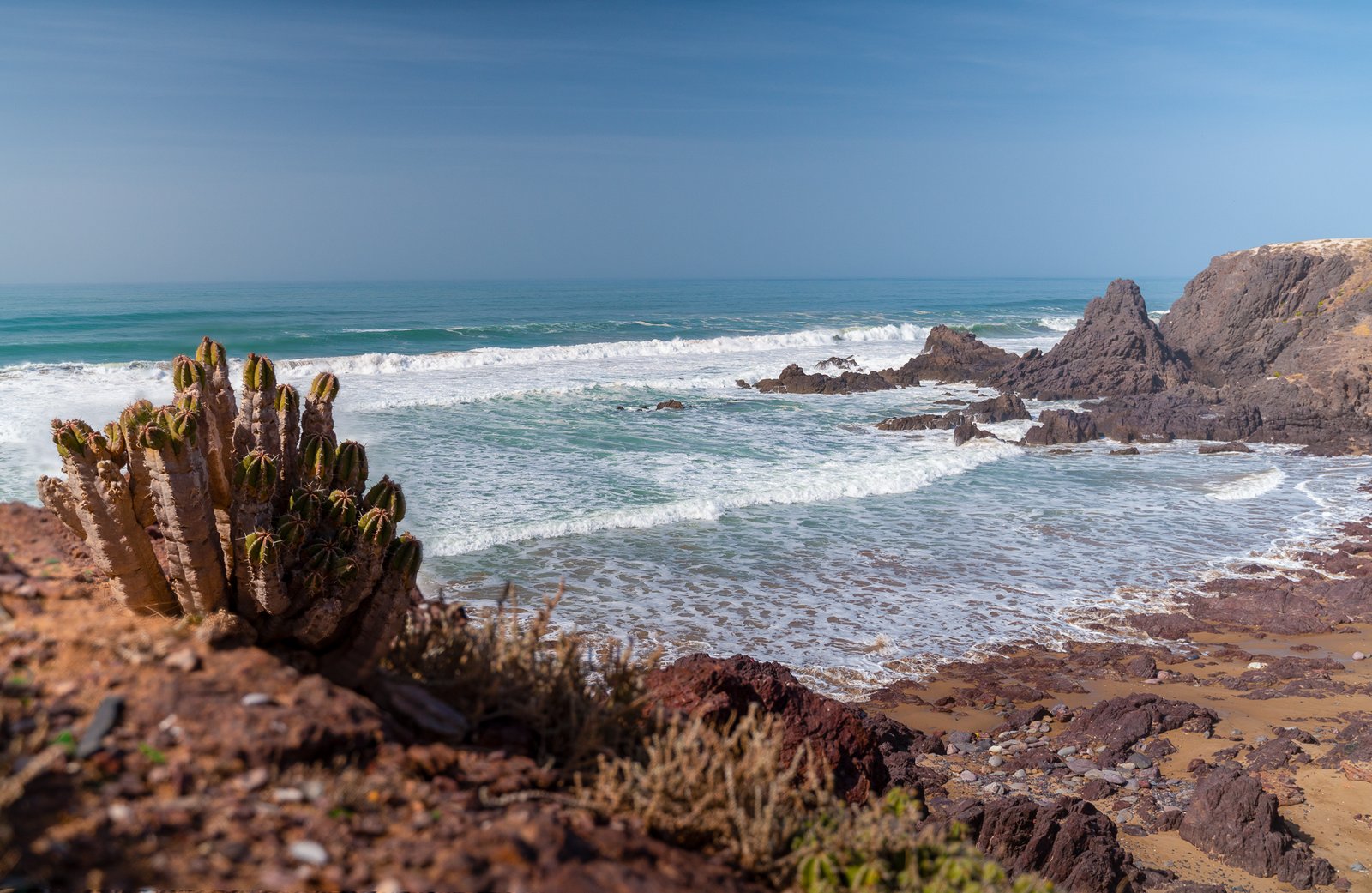
After days of moving through the interior landscapes of Morocco—mountains, valleys, and desert—it felt almost surreal to eventually reach the Atlantic Ocean. The land slowly softened as we approached the coast. The dry browns and ochres of the inland terrain gradually gave way to cooler air, patches of green, and the distant smell of salt carried on the wind.
We arrived near the coastal town of Sidi Ifni, a small and somewhat overlooked place along Morocco’s southern Atlantic shoreline. Unlike the grand imperial cities inland, Sidi Ifni has a quieter rhythm. Its architecture still carries traces of its Spanish colonial past, and the town sits above the ocean on a bluff overlooking long stretches of rugged coastline.
Morocco’s Atlantic coastline stretches for nearly 2,000 miles, forming the western edge of North Africa. Along this coast, cold ocean currents and steady winds shape rugged cliffs, broad beaches, and fishing towns that feel very different from the interior of the country. Places like Sidi Ifni offer a quieter side of Morocco, where the rhythms of the Atlantic replace the constant motion of the inland cities.
What struck me most was the sudden sense of scale. Cliffs drop sharply toward wide beaches where waves roll in endlessly from the open Atlantic. The coastline stretches for miles in both directions, interrupted only by rocky headlands and small fishing villages scattered along the shore. Compared to the crowded energy of Marrakesh, the atmosphere here felt almost contemplative.
For me personally, there was another small novelty. As an American, most of the sunsets I’ve watched over the ocean have been over the Pacific. Standing on that Moroccan shoreline, watching the sun drop directly into the Atlantic Ocean, felt unfamiliar and memorable at the same time.
The sky gradually shifted from warm gold to deep orange, then faded into purples and blues as the last light disappeared beyond the water. Fishing boats moved slowly along the horizon while seabirds drifted above the cliffs.
The Moroccan Atlantic coast offers a completely different palette than the interior of the country. The warm desert tones give way to cooler blues and greens, while the cliffs and beaches create a sense of openness that contrasts sharply with the density of the inland cities.
More than anything, that evening reinforced a realization that had been growing throughout the trip. Morocco is a country of remarkable contrasts. Within a relatively short distance you can move from crowded medieval markets to quiet mountain villages, from vast desert dunes to windswept Atlantic cliffs. Each landscape feels distinct, yet they all connect to form a country that contains a wide range of environments.
The Sahara Desert
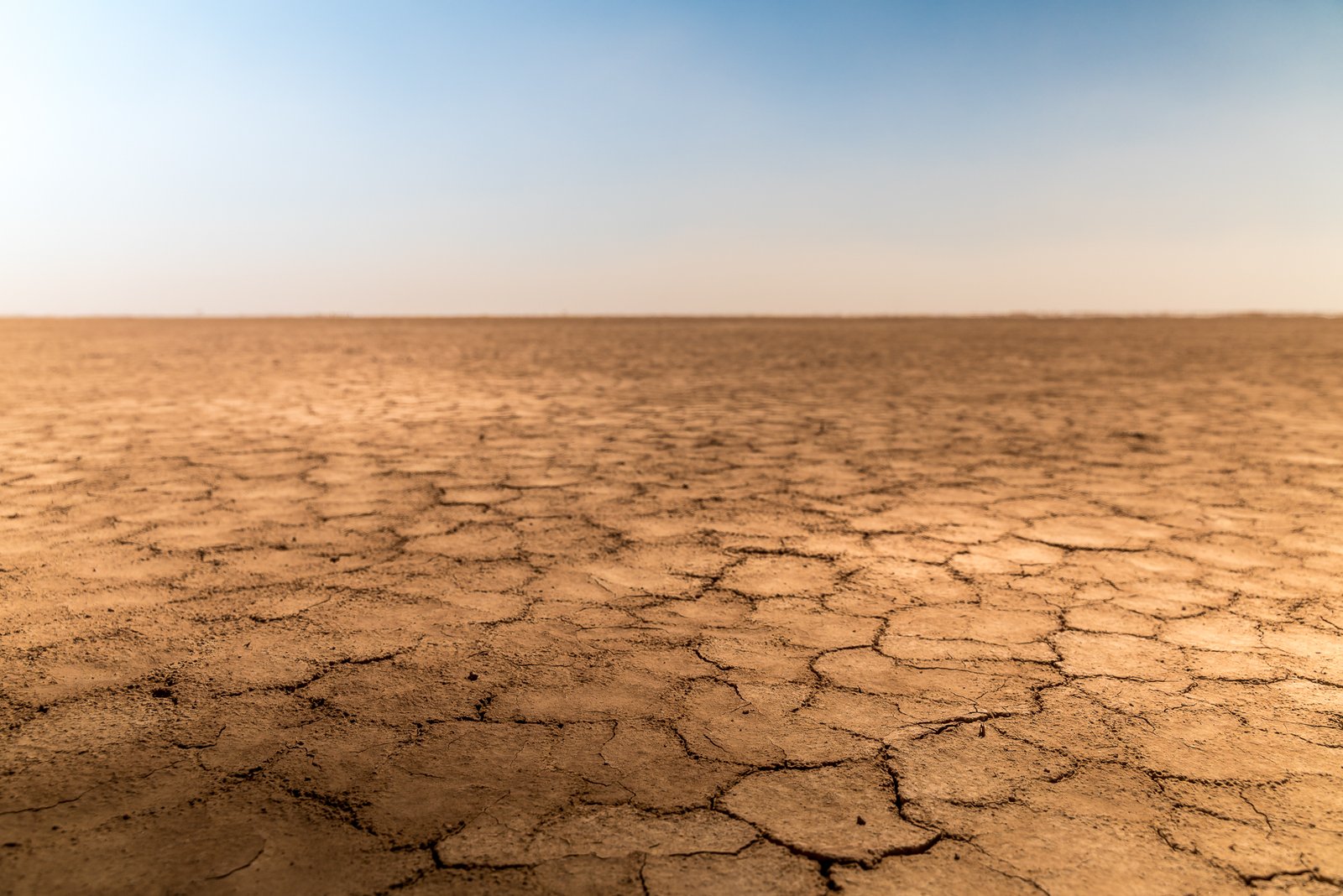
Eventually the mountains fade away and the landscape begins to change again. The villages grow farther apart. Vegetation thins out and begins to disappear entirely. The color palette shifts toward muted browns and pale golds, and the sky seems to grow larger with every mile. The road stretches forward across wide plains where the horizon feels impossibly distant.
This is the beginning of the Sahara.
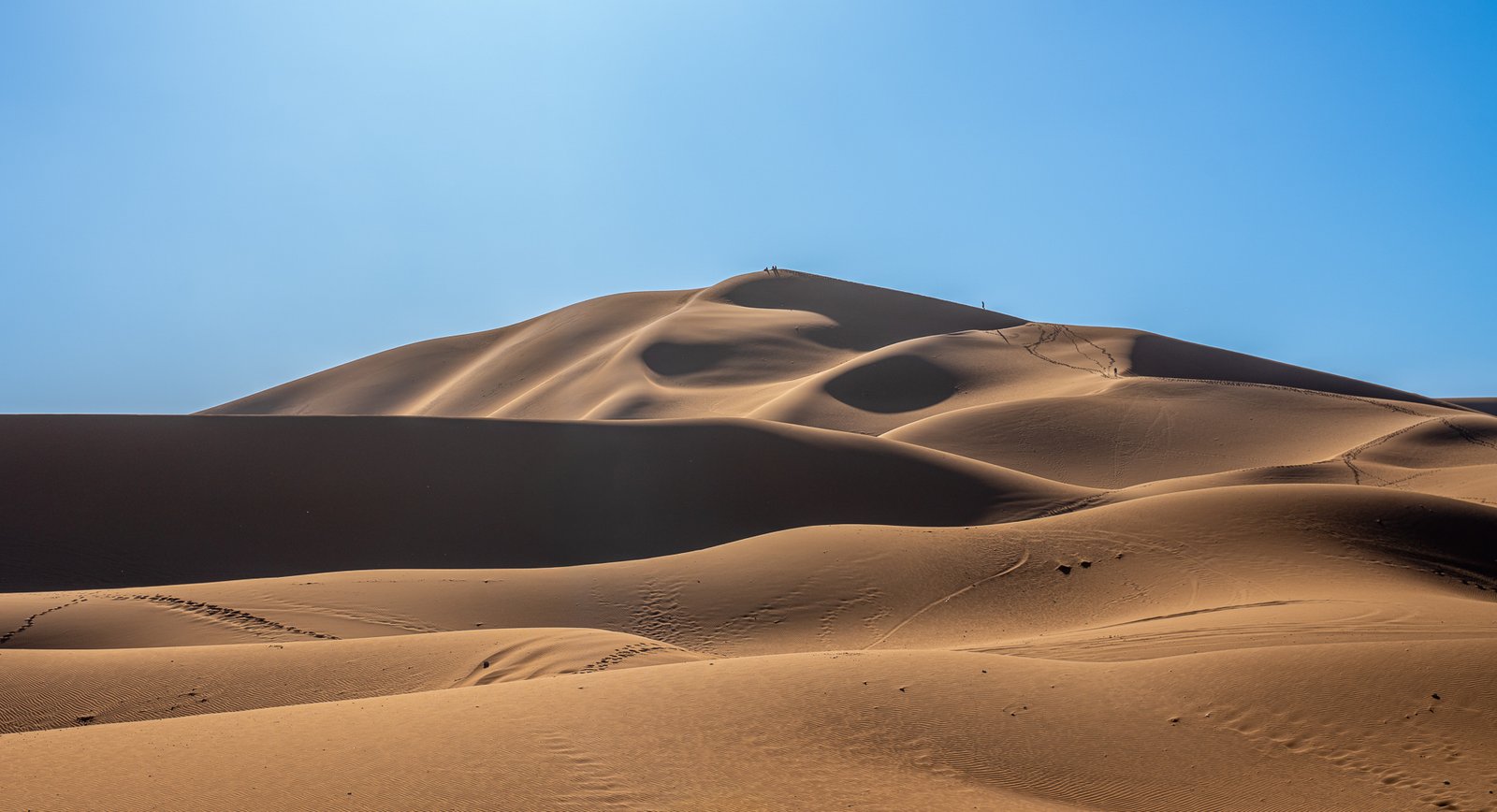
The Sahara Desert is the largest hot desert on Earth, covering much of North Africa and stretching across more than 3.5 million square miles. The dunes of southern Morocco represent only the northern edge of this immense landscape. Wind continually reshapes the sand here, sculpting dunes that shift and migrate over time, creating sweeping patterns and curves.
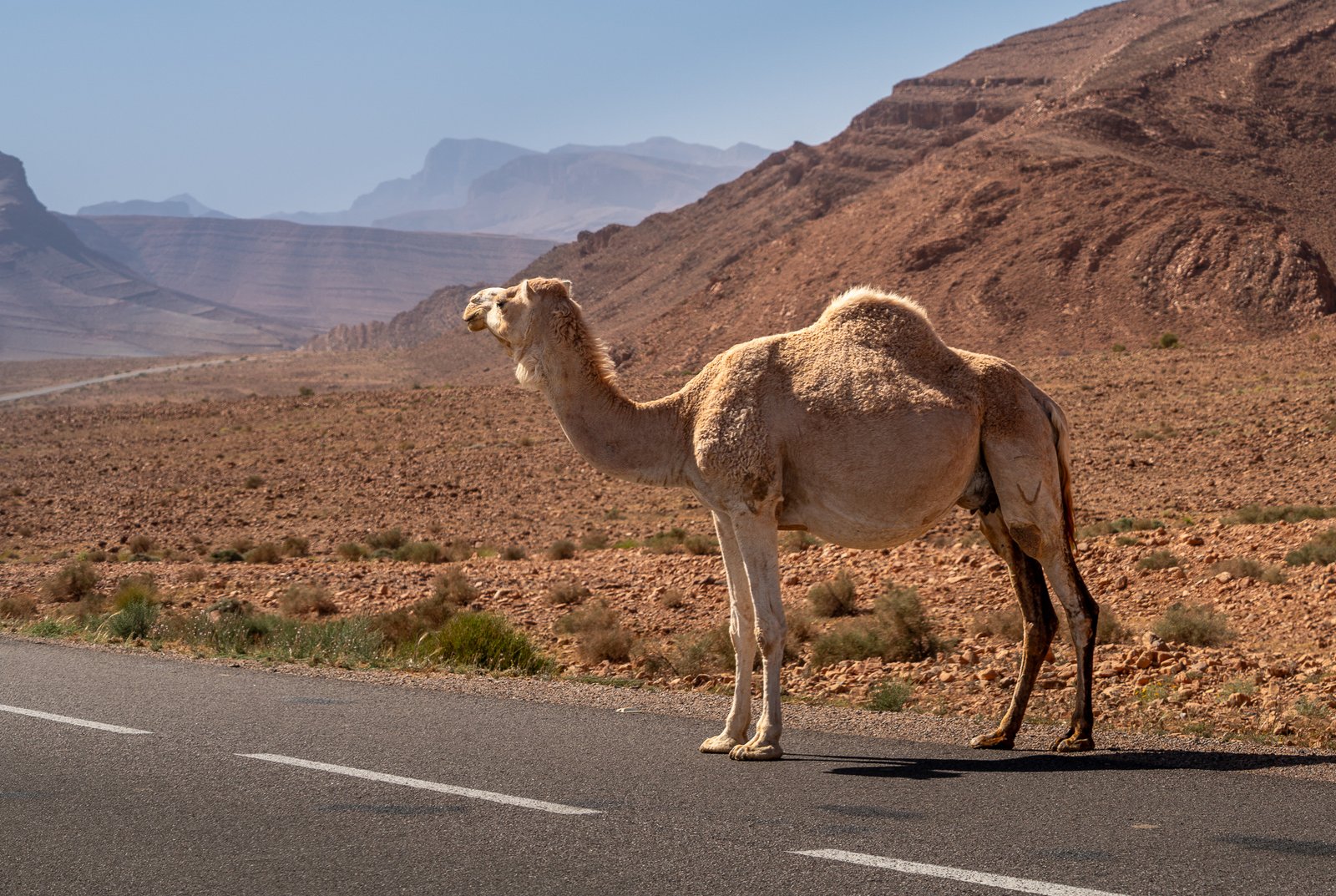
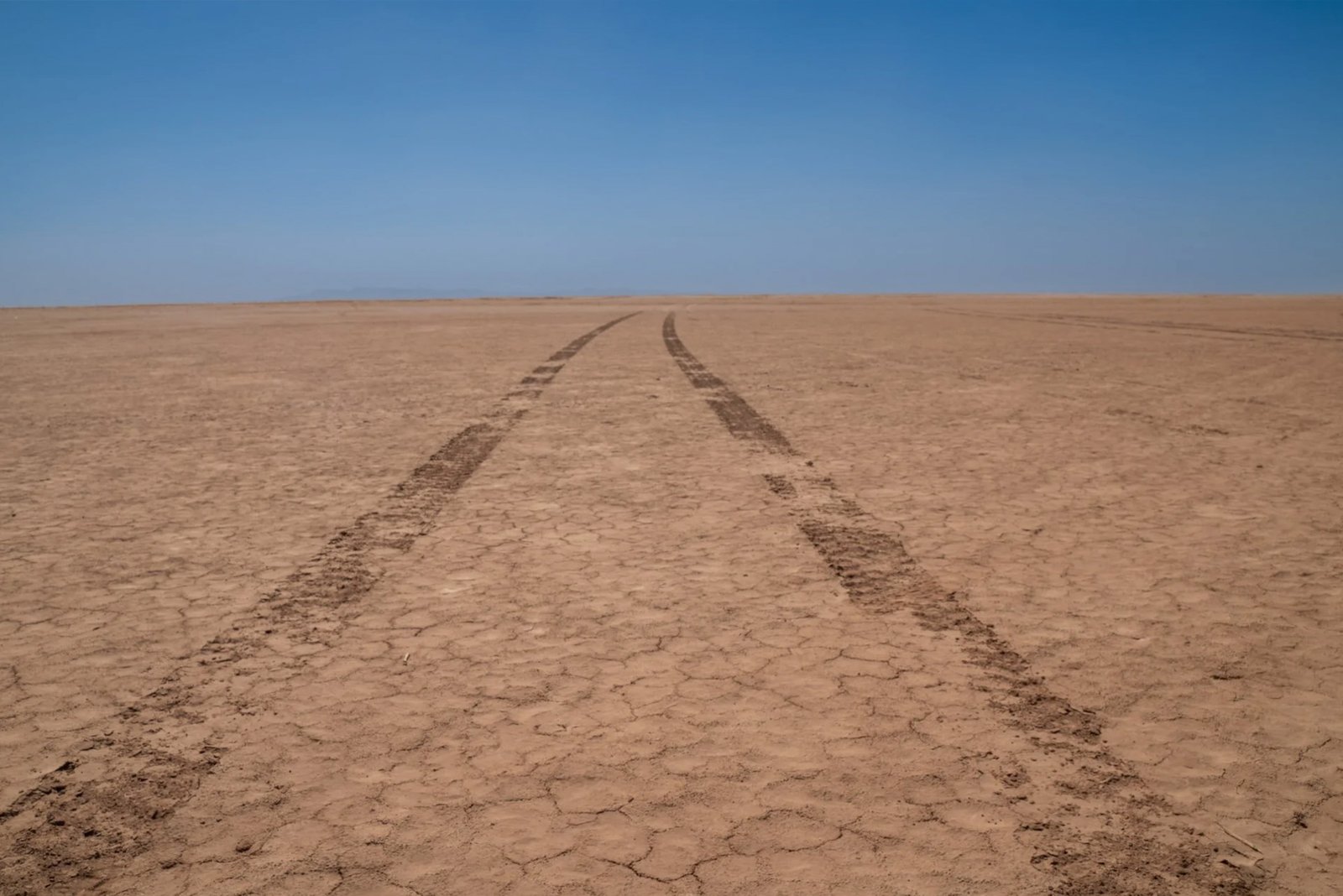
Driving across this landscape is a surreal experience. For long stretches it almost feels as if there is no road at all—just a faint track across an immense open space. The land rolls gently at first, broken by occasional rocky ridges and shallow valleys. But eventually the terrain begins to change again, and the first real dunes appear in the distance.
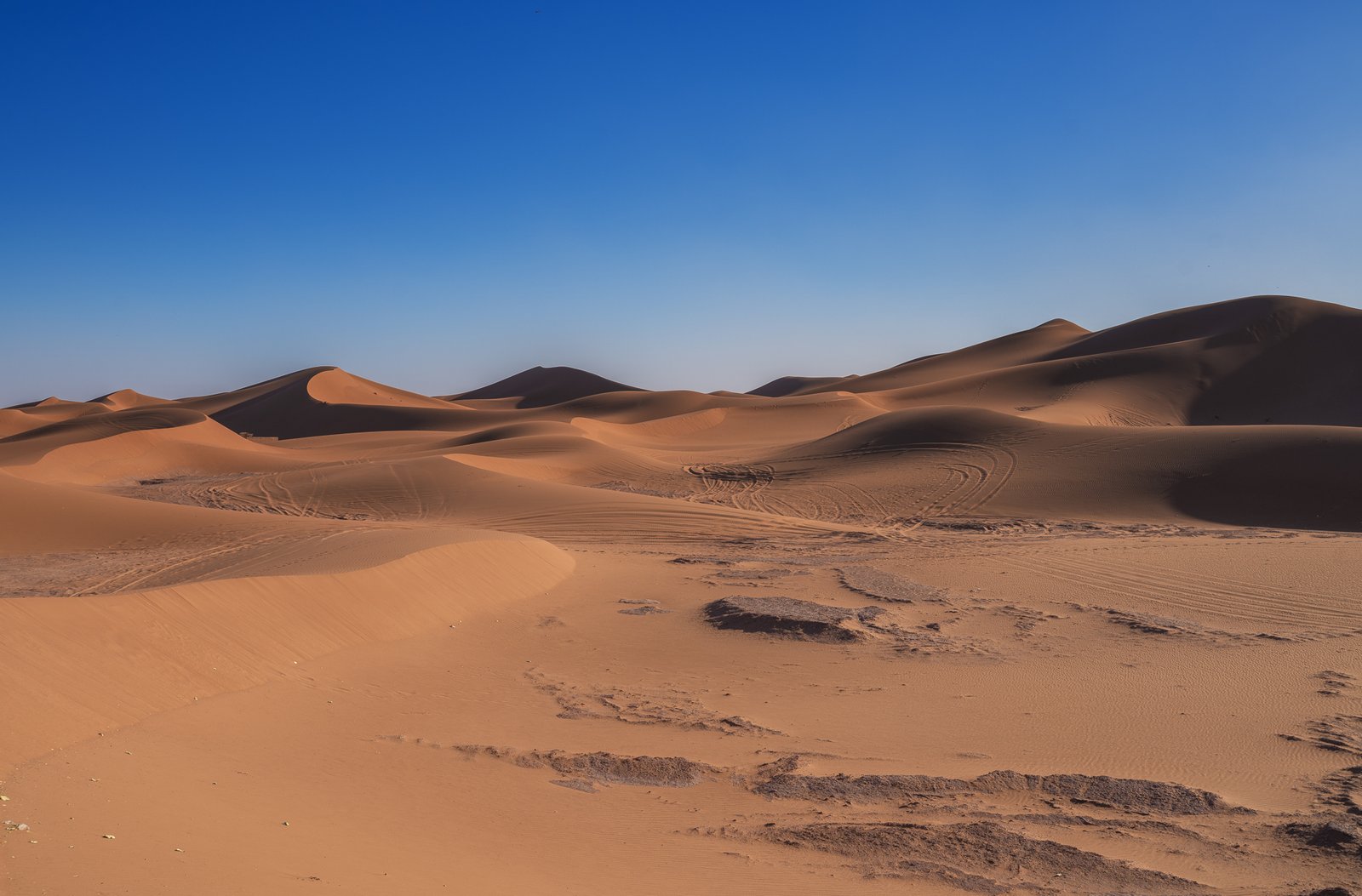
At first they seem small, just ripples in the sand. Then they grow. Soon the dunes rise in sweeping arcs that resemble mountains more than hills. Their shapes shift constantly with the wind, sculpted into ridges and curves that catch the late afternoon light in dramatic patterns of shadow and gold.
We eventually left the road entirely and followed a faint path deeper into the dunes until we reached our destination—a small desert camp hidden among the sand hills. The camp consisted of a cluster of large canvas tents arranged around a central gathering area. Despite the remote location, the accommodations were surprisingly comfortable. Each tent held real beds with thick blankets to keep out the desert chill that settles in after sunset. The setting felt both primitive and refined at the same time. Beyond the tents there was nothing but sand dunes stretching to the horizon in every direction.
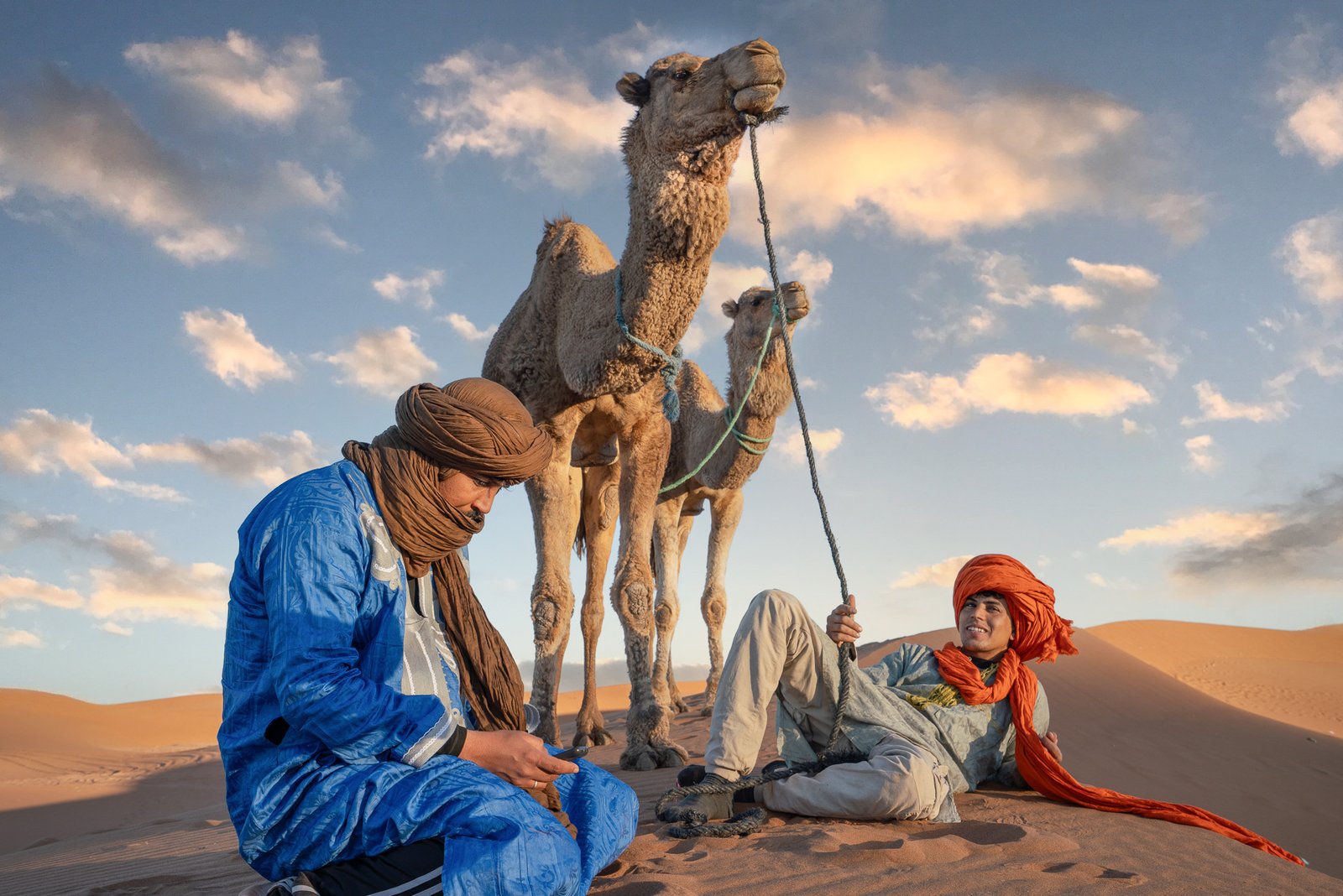
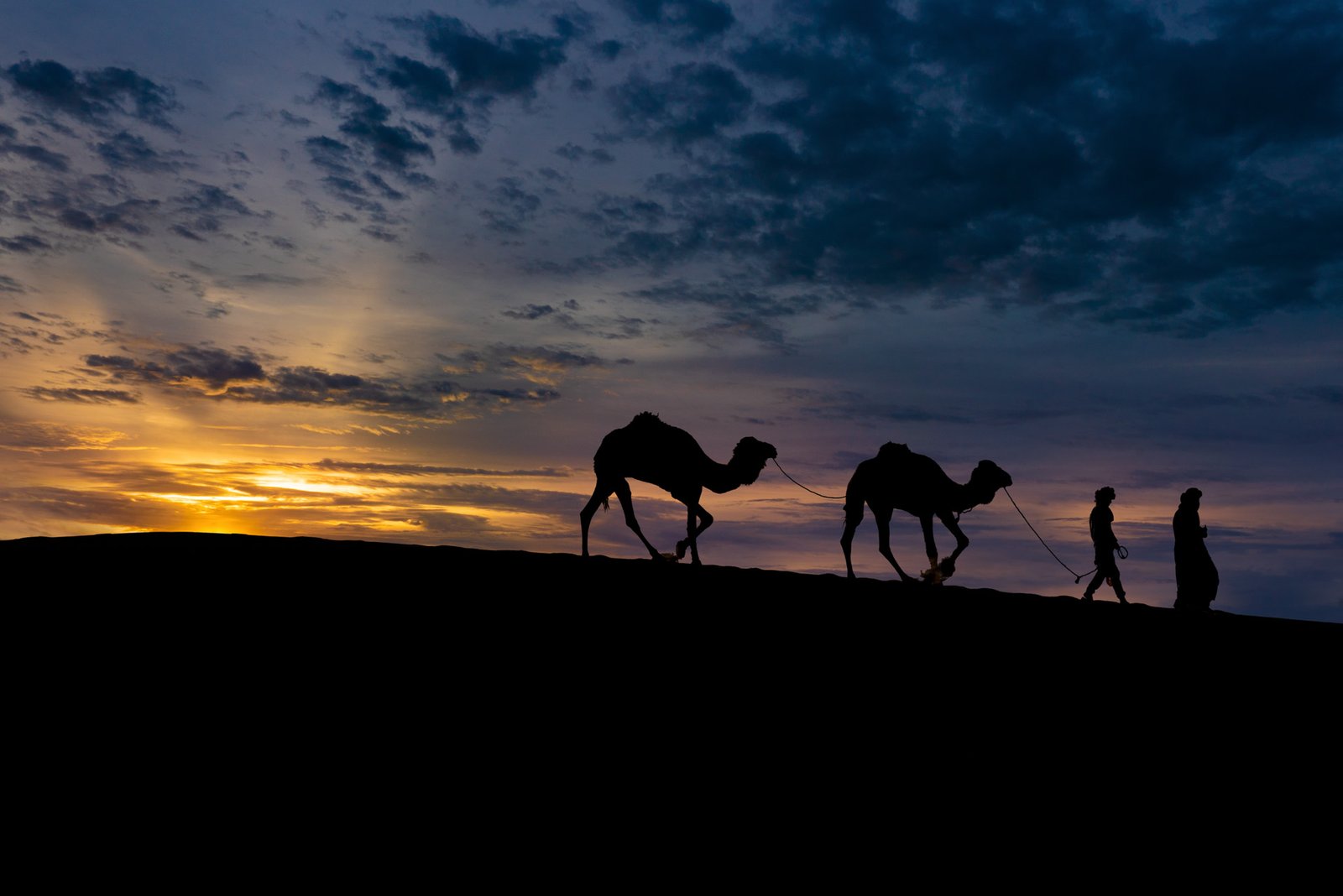
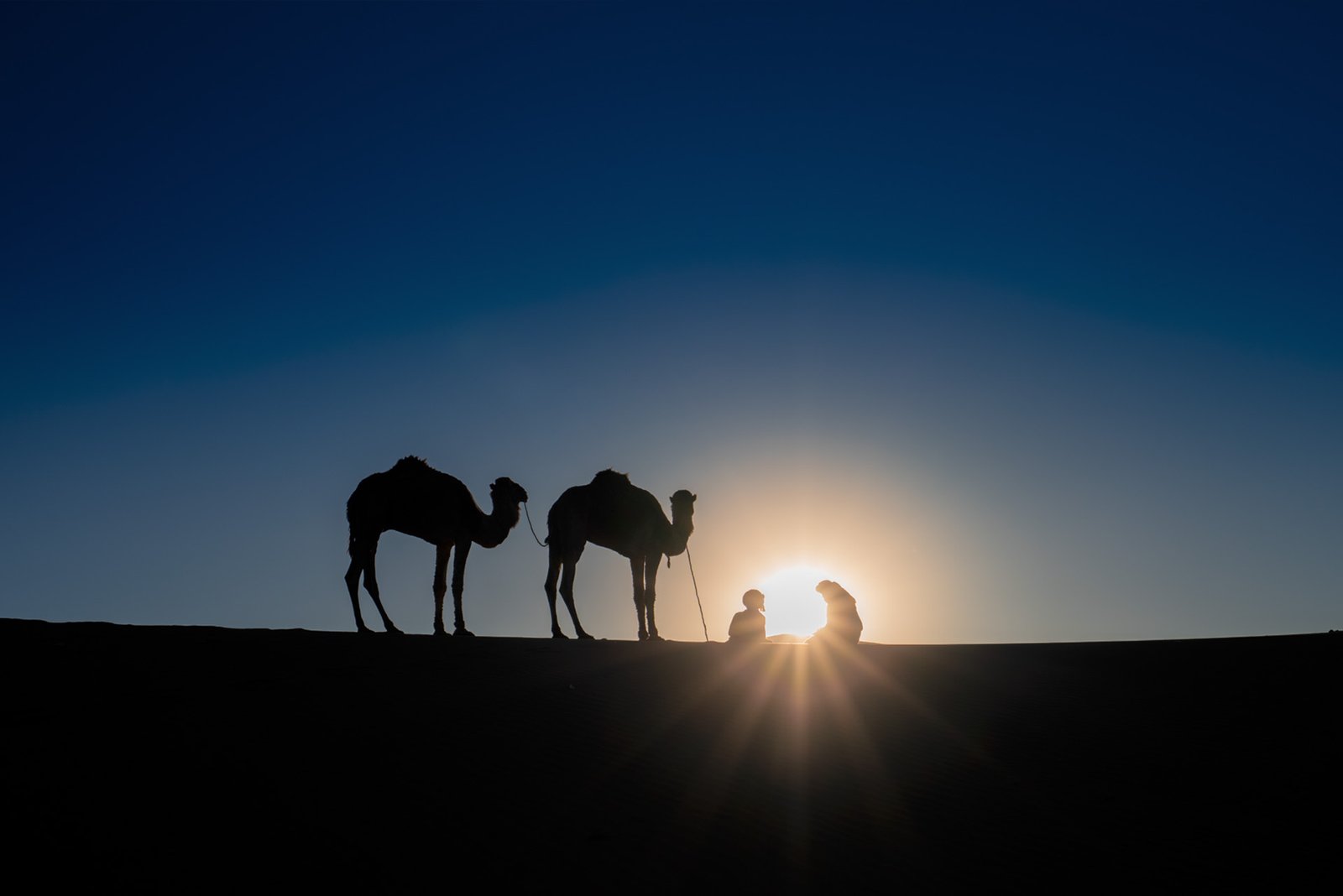
One of the more traditional ways to experience the desert is by camel, and a small caravan was available for guests who wanted to ride out across the dunes. I chose instead to spend time walking through the sand and observing the landscape and the people who worked at the camp.
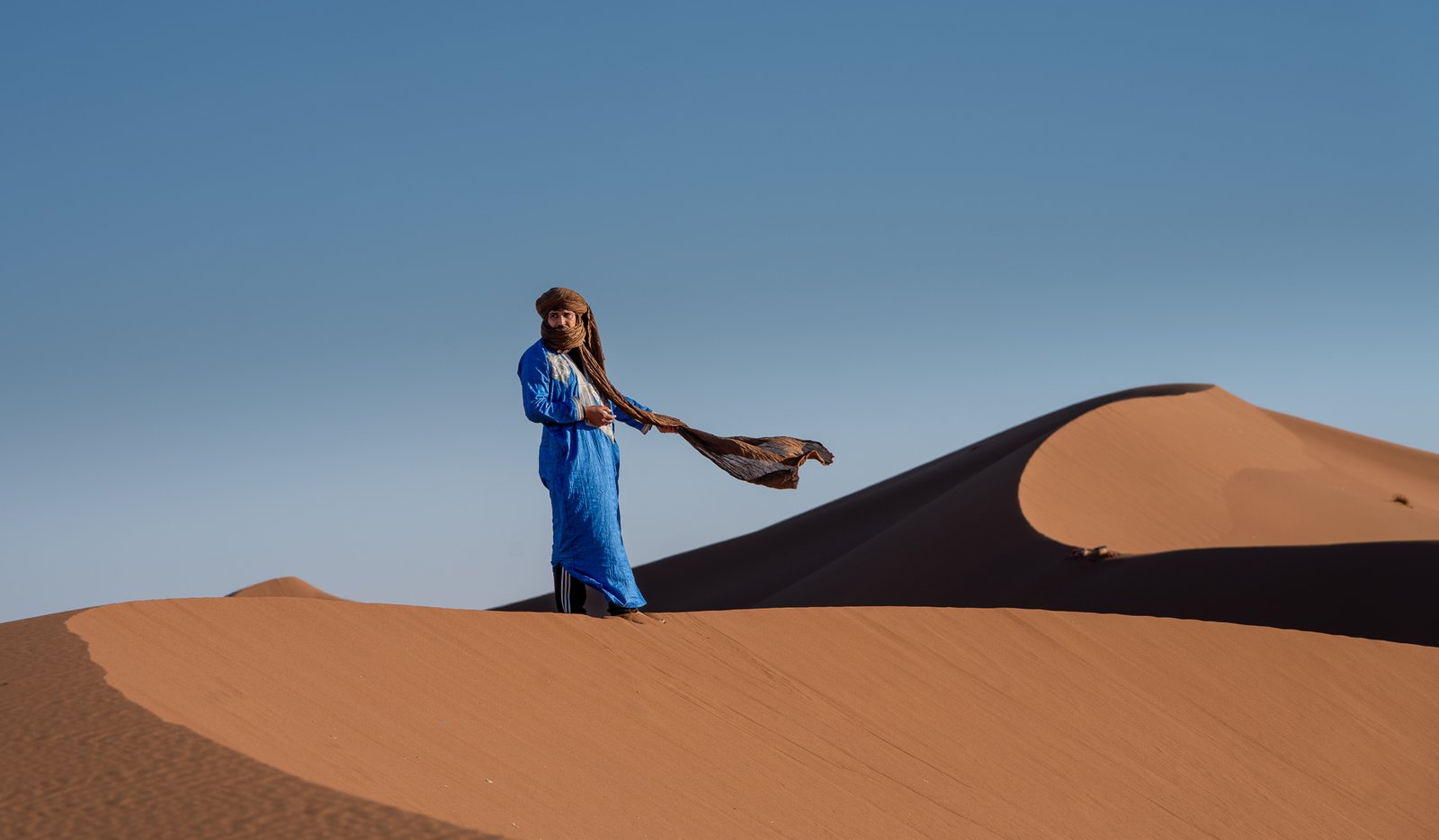
Local hosts dressed in traditional garments moved easily through the dunes as if they had spent their entire lives there. Watching them navigate the terrain made the place feel even more timeless. As evening approached, the desert began to change character again.
The harsh brightness of the afternoon softened into warm, golden light that moved across the dunes in slow, continuous shifts. Shadows stretched longer, revealing every curve and ridge in the sand.
Dinner was served in a communal tent where guests gathered to share a traditional meal. Afterward, music began around a small campfire as local musicians played drums and sang under the open sky. With the nearest towns many miles away, the desert quickly became quiet again once the music faded.
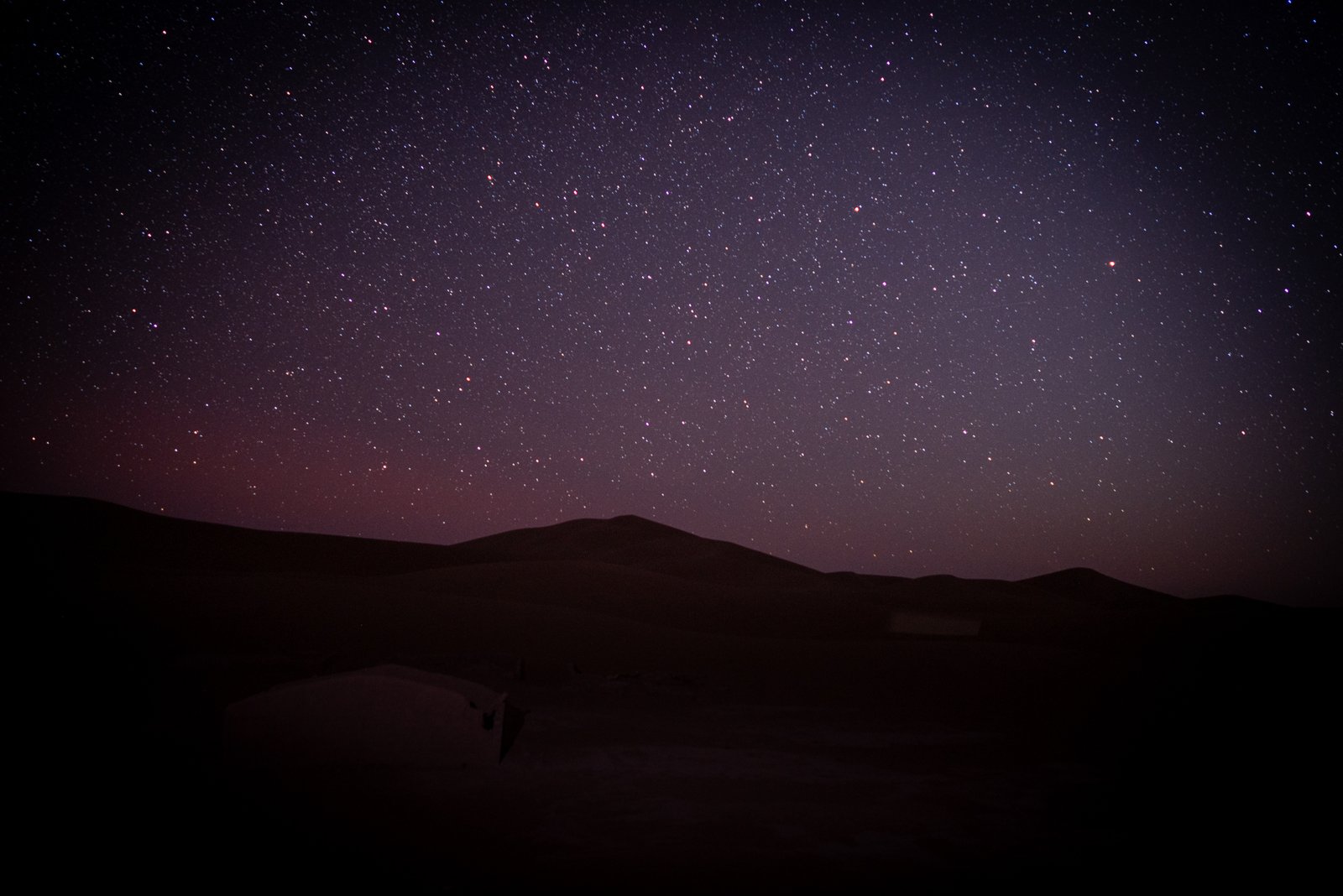
The night sky over the Sahara is extraordinary. With almost no light pollution for hundreds of miles, the Milky Way stretches clearly across the darkness, and countless stars fill the sky from horizon to horizon. But what stands out most is the silence.
Standing among those dunes, surrounded by nothing but sand and sky, the scale of the landscape becomes unmistakable. It is a place defined as much by absence as by presence.
Why Marrakesh Became the Highlight
Before the trip began, the night in the Sahara Desert was what I expected to remember most. The desert was everything I imagined—vast, quiet, and visually striking. But when I look back on the entire journey, the place that stands out most clearly is Marrakesh itself.
The energy of the medina.
The colors of the souks.
The movement of Jemaa el-Fnaa.
The details hidden in every corner of the city.
Marrakesh holds your attention. The city moves constantly. Merchants call out from crowded stalls. Craftsmen shape metal and leather in workshops that have existed for generations. The smell of spices drifts through narrow alleys while scooters and bicycles navigate the crowds. Every turn reveals something new. And yet Marrakesh is only one part of the story.
What makes Morocco distinctive is the range of environments within a relatively small country. In the span of a single trip, it is possible to move through dense urban markets, cross a major mountain range, reach the Atlantic coastline, and continue into the Sahara Desert.
Ancient cities filled with color and movement.
Mountain villages shaped by elevation and climate.
Desert landscapes defined by wind and scale.
Coastal regions influenced by the Atlantic.
Each region is shaped by different forces, but together they form a coherent whole. Morocco is not defined by a single landscape. It is defined by contrast, transition, and the relationship between geography and daily life. Places like that are rare.